How AI Is Revolutionising Web Design for Startups

Launching a startup has never been more competitive. Founders need to establish trust, attract customers and generate leads quickly, but traditional website design often requires significant time, budget and technical expertise.

Artificial Intelligence (AI) is changing that completely. Today, startups can build high-quality, search-optimised websites in days rather than weeks, dramatically reducing costs while accelerating their journey to market.

AI-powered web design combines automation, machine learning and intelligent content generation to streamline every stage of website creation.

However, while AI dramatically speeds up development, the best results still come from combining advanced AI tools with experienced designers who understand branding, user experience and search optimisation.

Lets explore how AI is transforming web design for startups, where human expertise still plays a critical role, and why combining both approaches gives businesses a significant competitive advantage.
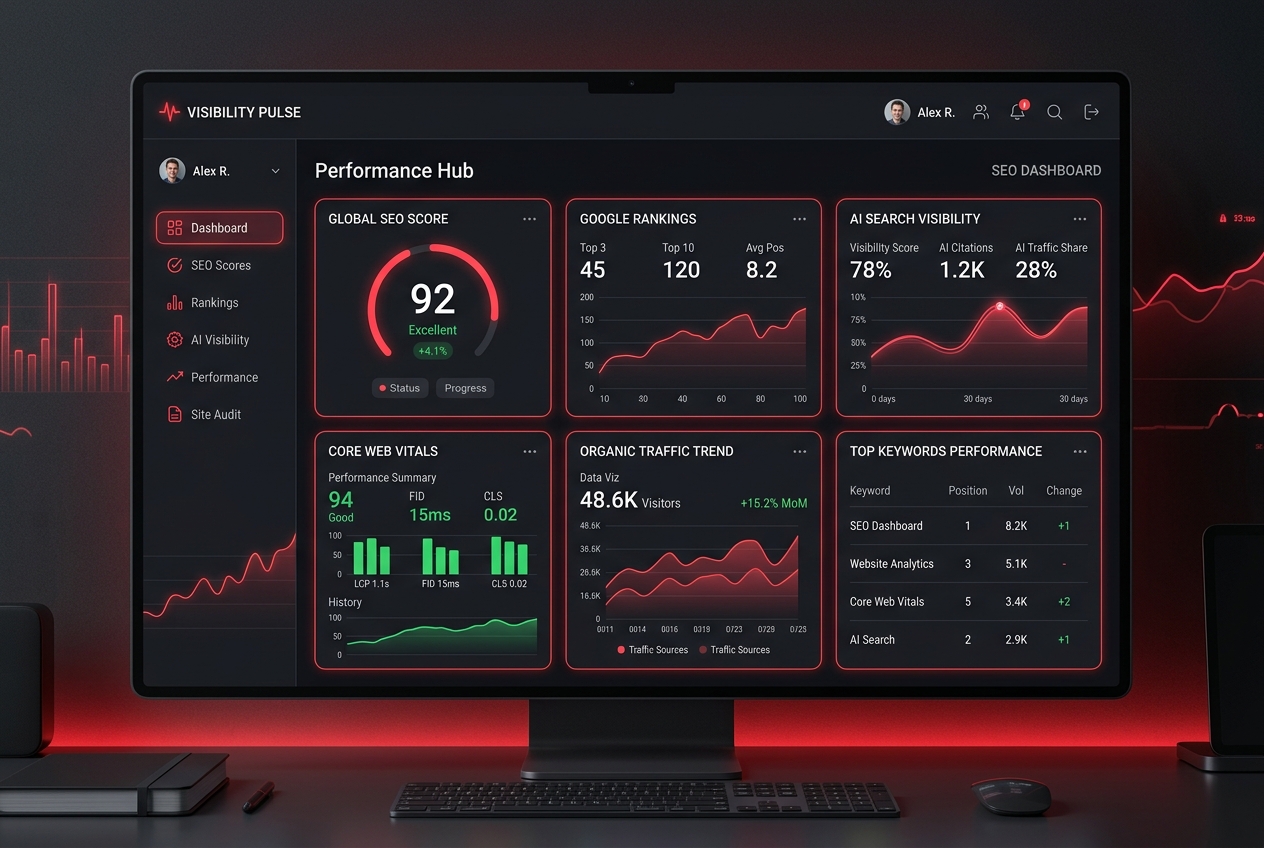
Dark multi-panel dashboard on a computer monitor labeled 'Performance Hub' showing SEO score, rankings, AI visibility, and traffic trends with red accent lines.

AI-Powered Design: A Game Changer for Startups

For many startups, launching quickly is essential. Every week spent waiting for a website is a week of missed opportunities, slower customer acquisition and delayed revenue.

AI website builders have fundamentally changed this process by allowing businesses to generate professionally designed websites from a simple text prompt.

Modern AI platforms can automatically create page layouts, write content, generate imagery, optimise search engine metadata and even produce responsive mobile designs within minutes.

This allows founders to focus on growing their business rather than managing lengthy development projects.

Research and industry leaders increasingly agree that AI is enhancing design workflows rather than replacing creative professionals.

Figma CEO Dylan Field has repeatedly argued that AI raises the importance of quality design because it automates repetitive tasks while making human judgement, creativity and brand differentiation even more valuable.

“The future won’t be designed by accident.” – Dylan Field, Co-founder & CEO, Figma (Config 2025 opening keynote).

Why AI Website Design Makes Sense for Startups

Launch Faster Than Ever Before

Traditional web design projects often involve weeks of planning, wireframing, revisions and development before a website goes live.

AI dramatically compresses this timeline:

  • Generate complete website concepts in minutes.
  • Create responsive layouts automatically.
  • Produce SEO-friendly page structures from day one.
  • Publish websites in days instead of months.

For startups testing new ideas or launching MVPs, this speed can make the difference between leading a market or falling behind competitors.

Reduce Development Costs

Budget is one of the biggest constraints facing early-stage businesses.

Hiring designers, developers, copywriters and SEO specialists individually can quickly become expensive.

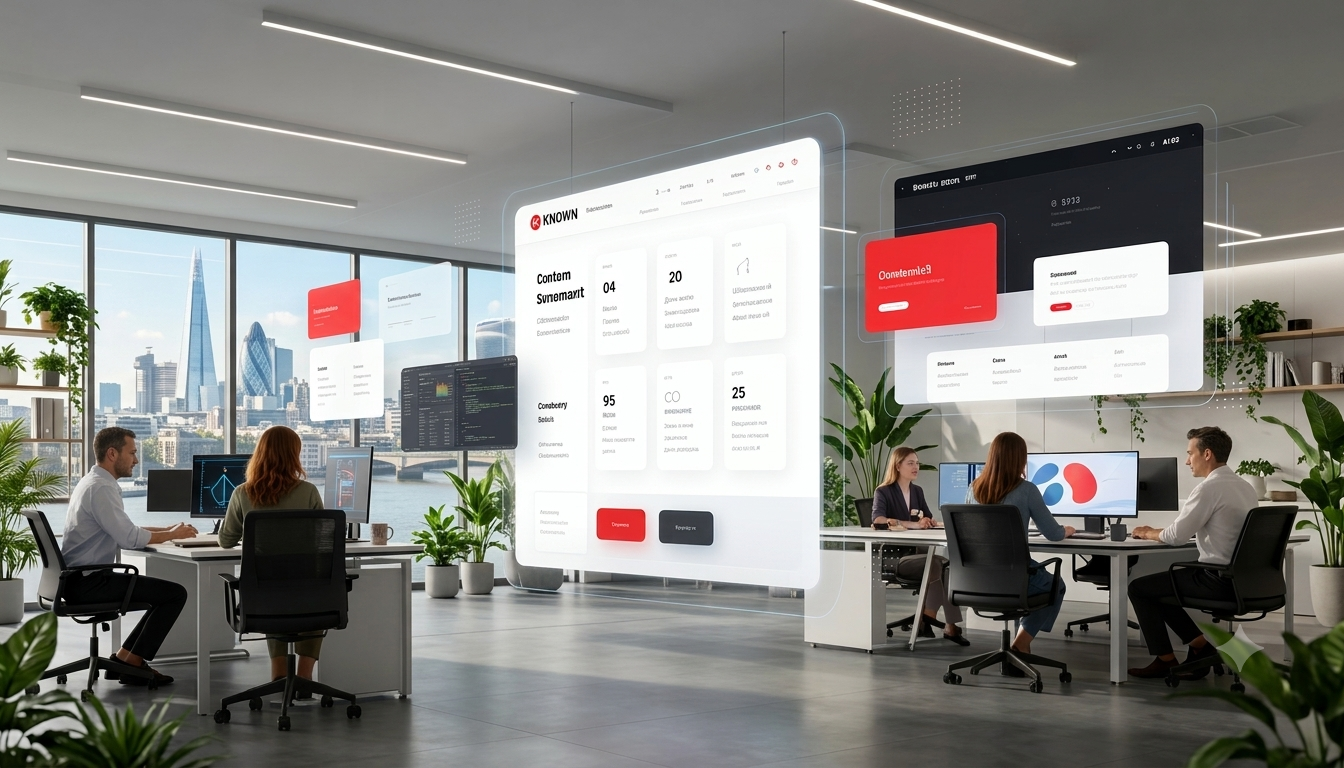
KNOWN AI changes this by providing an AI-powered website builder capable of producing high-quality websites from a simple 2000-character natural language prompt, with packages starting from just £9 pm.

Businesses also benefit from a three-day free trial, allowing founders to experience the platform before committing.

SEO Is Built In From The Start

Many startups launch beautiful websites that struggle to attract visitors because search engine optimisation (SEO) is treated as an afterthought.

KNOWN AI’s website builder automatically generates:

  • Optimised heading structures.
  • Meta titles and descriptions.
  • Responsive page layouts.
  • Fast-loading assets.
  • Core Web Vitals improvements.

This provides startups and SME’s with a much stronger foundation for organic search visibility while reducing ongoing optimisation work.
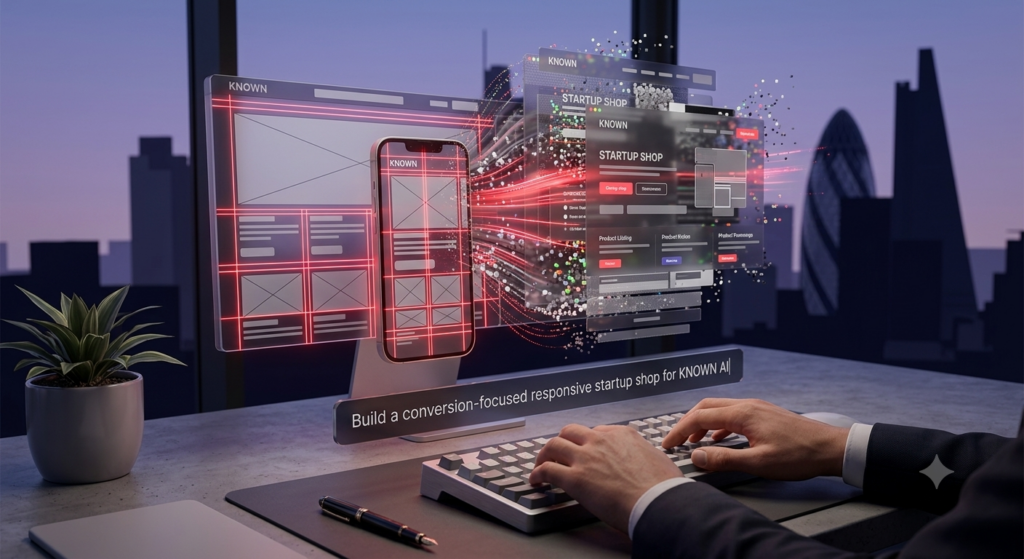
AI website builder generating a responsive website layout instantly from a text prompt

Core Insights: How AI Is Transforming Modern Web Design

AI is no longer a futuristic concept reserved for large enterprises. It has become an accessible and practical tool that empowers startups to compete with established brands by streamlining the website design and development process, improving user experiences and enhancing search visibility.

AI Generates Instant Website Prototypes

One of the biggest advantages of AI-powered web design is speed.

Instead of spending days creating wireframes and mock-ups, founders can describe their business in a simple prompt and generate a fully responsive website within minutes.

KNOWN AI’s Agentic Website Builder enables startups to quickly visualise their ideas, making it easier to validate concepts, gather feedback and launch products without lengthy development cycles.

  • Generate complete page layouts from a single prompt.
  • Create mobile-friendly designs automatically.
  • Produce professional content structures instantly.
  • Reduce development time from weeks to days.

Built-In SEO and Performance Optimisation

Launching a website is only the first step. A website also needs to perform well in search engines and provide an excellent user experience.

Our AI-powered platform automatically implements many SEO, GEO and AEO-optimisation best practices during the build process.

These include:

  • Semantic HTML structures.
  • Optimised heading hierarchy.
  • Search-friendly metadata.
  • Responsive layouts.
  • Fast loading speeds.
  • Core Web Vitals optimisation.

For startups with limited marketing resources, this provides a significant advantage by creating a website that’s ready to compete from day one.

AI-Generated Imagery Reduces Costs

Professional photography and premium stock imagery can quickly consume a startup’s budget.

AI image generation now enables businesses to create unique photo-realistic and sharp visuals tailored specifically to their brand identity.

Instead of relying on generic stock photography used by thousands of other websites, startups can generate custom illustrations, hero banners and marketing graphics that align with their messaging and visual identity.

Content Creation Becomes Faster

Creating website copy often delays launches because founders struggle to write compelling content.

KNOWN AI assists by producing well-structured first drafts for service pages, landing pages and product descriptions.

However, AI-generated content should always be reviewed and refined by experienced copywriters or digital professionals to ensure accuracy, brand consistency and originality.
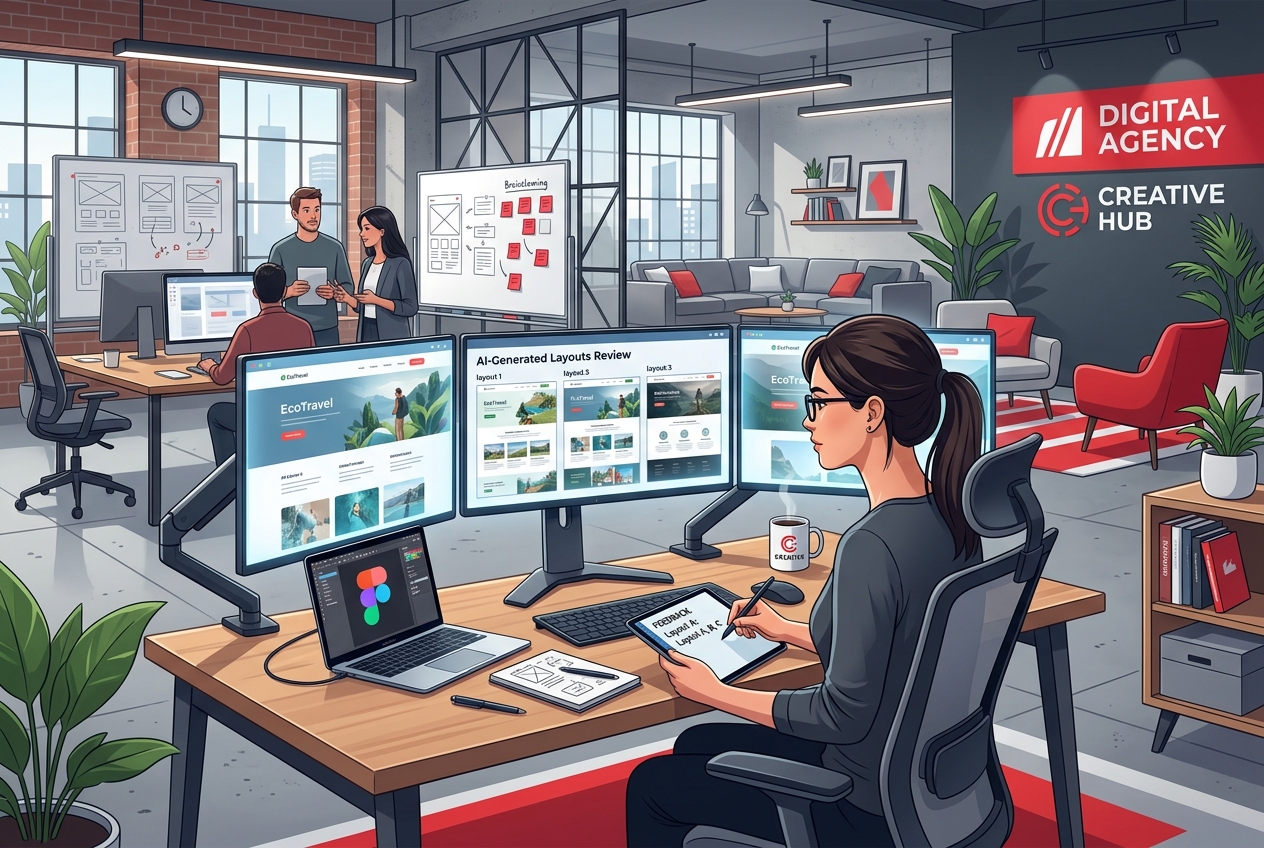
Designer at a multi-monitor desk in a modern open-plan office, sketching on a tablet.

The Human Touch Still Matters

Despite the impressive capabilities of AI, technology alone cannot replace strategic thinking, creativity and human experience.

AI excels at automation, but it doesn’t fully understand your brand story, customer emotions or long-term business objectives.

This is where experienced designers and prompt engineers add enormous value.

KNOWN DESIGN combines the speed of AI with more than 12 years of award-winning customised website design and development experience.

Rather than simply generating websites, the team carefully refines AI outputs to ensure every website reflects the client’s unique brand, business goals and customer expectations.

This hybrid approach delivers the best of both worlds:

  • Rapid AI-generated foundations.
  • Expert prompt engineering.
  • Professional branding consistency.
  • Exceptional user experience.
  • Conversion-focused layouts.
  • Human quality assurance.

Every AI-generated website can also be enhanced through expert revisions and ongoing WordPress CMS support, ensuring Brands continue evolving as they grow.
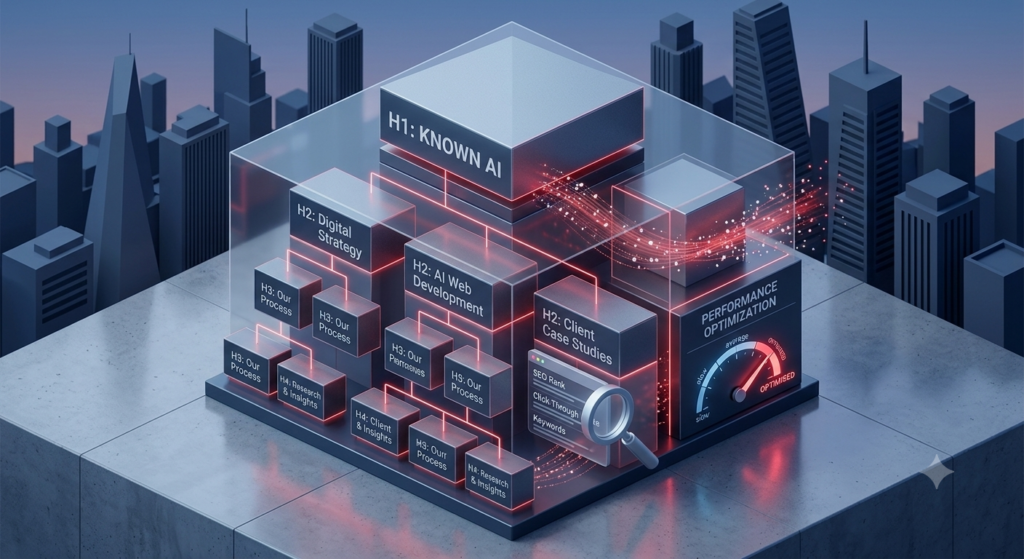
Website structure illustration showing built-in SEO and Core Web Vitals optimisation

Problem vs Solution

The Problem

Many startups face the same challenges when launching online:

  • Limited marketing budgets.
  • Slow development timelines.
  • Difficulty finding reliable developers.
  • Poor SEO performance.
  • Generic templates that fail to stand out.
  • Expensive ongoing maintenance.

These obstacles often delay product launches and reduce opportunities to generate leads during the crucial early stages of business growth.

The Solution

AI-powered website development addresses these challenges by dramatically reducing both time and cost while maintaining professional quality.

KNOWN AI enables startups to:

  • Generate fully responsive websites within minutes.
  • Launch professionally designed websites in days.
  • Benefit from built-in SEO optimisation.
  • Create AI-generated photo-realistic crisp imagery on demand.
  • Scale securely using reliable Google Cloud Hosting servers.
  • Receive expert refinement from the KNOWN DESIGN team.

Instead of choosing between affordability and quality, startups can now enjoy both.

AI won’t replace designers, but designers using AI will replace designers who don’t.

“I think [websites] are very fundamental to the future of humanity.” – Matt Mullenweg, Co-founder of WordPress & CEO, Automattic

The rapid adoption of AI tools across the creative industry demonstrates that businesses embracing AI-enhanced workflows are increasingly able to deliver projects faster while maintaining high quality through human expertise.

Real-World Application

Imagine you’re launching a new software startup.

Traditionally, you’d spend weeks briefing designers, waiting for concepts, revising designs, sourcing imagery, writing content and coordinating developers before your website is ready.

Using KNOWN AI, you simply describe your business idea, target audience and preferred style.

Within minutes, the AI platform generates a professionally designed website complete with responsive layouts, structured content, SEO-ready pages and AI-generated visuals.

KNOWN DESIGN then refines the website through expert prompt engineering, ensuring every element aligns with your branding, messaging and business objectives.

The result is a polished, high-performing website that’s ready to convert visitors into customers far sooner than traditional development methods allow.

Four colleagues celebrate a product launch, toasting over a transparent digital map display in a modern office setting with charts on the wall.",

Why AI Web Design Matters More Than Ever

The way people discover companies online is changing rapidly. Ranking on Google is still important, but today consumers are increasingly asking questions directly to AI-powered platforms such as ChatGPT, Google AI Overviews, Microsoft Copilot, Gemini and Perplexity.

This shift means brands must optimise not only for traditional search engines but also for AI-powered answer engines.

Search Engine Optimisation (SEO) remains the foundation of online visibility, but Answer Engine Optimisation (AEO) and Generative Engine Optimisation (GEO) are becoming equally important.

While SEO focuses on earning rankings in search results, AEO and GEO focus on creating content that AI systems can confidently understand, summarise and cite within their responses.

For startups, this presents an exciting opportunity.

AI-powered search often prioritises content that is clear, trustworthy, well-structured and demonstrates genuine expertise.

This means smaller businesses with exceptional content can compete alongside much larger brands without requiring enormous marketing budgets.

Future-Proofing Your Digital Presence

Building a website today is about far more than having an attractive homepage.

Businesses need websites that are:

  • Fast-loading and mobile responsive.
  • Structured using semantic HTML.
  • Optimised for Core Web Vitals.
  • Easy for AI models to understand.
  • Designed to answer real customer questions.
  • Built with long-term scalability in mind.

These principles not only improve traditional search rankings but also increase the likelihood of appearing within AI-generated answers and recommendations.

AI and human designer collaborating to refine a website's user experience and branding

Why Choose KNOWN DESIGN + KNOWN AI?

While AI website builders have made professional web design more accessible than ever, technology alone cannot guarantee exceptional results.

The most successful websites combine intelligent automation with experienced human expertise.

With more than 12 years of award-winning experience, KNOWN DESIGN has helped global brands across multiple industries establish powerful digital identities.

Combined with a 5-Star Google rating, an experienced design team and cutting-edge AI technology, clients receive the speed of automation without sacrificing creativity, strategy or quality.

KNOWN AI has been specifically developed to help startups launch faster while maintaining professional standards.

  • AI-powered website generation from a single prompt.
  • Launch-ready websites in days instead of months.
  • Three-day free trial before committing.
  • Secure Google Cloud hosting.
  • Built-in SEO and performance optimisation.
  • Professional refinement by expert prompt engineers.
  • WordPress CMS support and ongoing website improvements.

Rather than replacing designers, KNOWN AI empowers the KNOWN DESIGN team to spend more time refining user experience, improving branding, increasing conversions and ensuring every website delivers measurable business value.

A Smarter Investment for Startup Growth

Every startup faces the challenge of balancing speed, quality and affordability.

Traditionally, businesses had to compromise by choosing one or two of these priorities.

AI-powered website design changes that equation.

Instead of waiting months for a completed website, startups can launch quickly, validate their ideas, attract customers sooner and continually improve their online presence using AI-assisted workflows.

The result is a faster route to market, lower upfront costs and a website that continues evolving alongside the business.

Want to get even better results from AI-powered website builders?

Read our related guide: How To Write The Perfect AI Prompt to Build Your Dream Website

Ready to Build Your Startup Website?

Whether you’re launching your first business, validating a new product or scaling an existing company, KNOWN DESIGN and KNOWN AI provide everything needed to build a modern, high-performing website.

From branding design and premium custom website design and development to AI-powered website generation, Core Web Vitals optimisation, data analytics implementation and Answer Engine Optimisation (AEO), you’ll have access to an experienced team that understands both cutting-edge AI technology and proven digital marketing strategies.

The future of web design isn’t AI alone, it’s AI powered by experienced professionals who know how to transform great ideas into exceptional digital experiences.
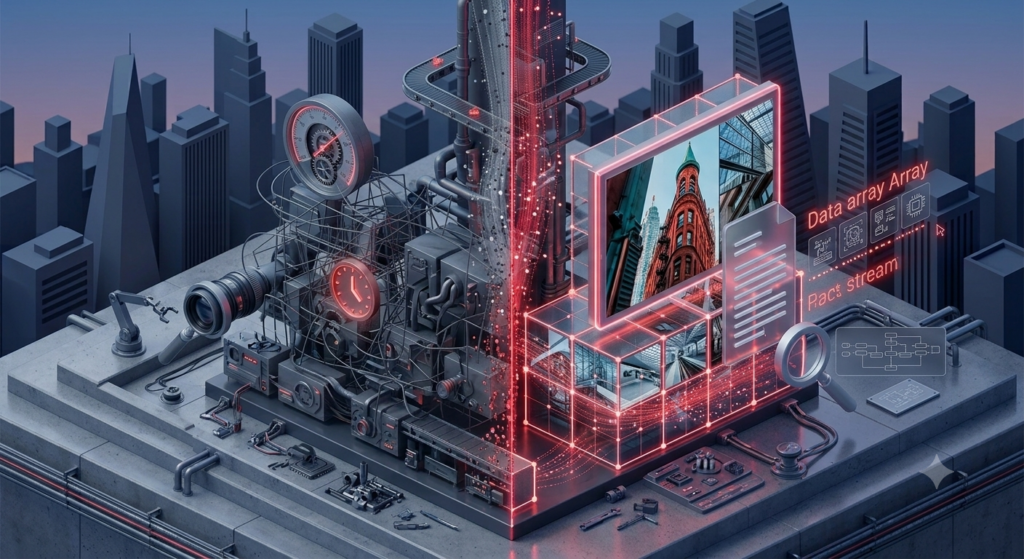
Before and after comparison of slow generic website development versus fast AI-powered website launch

Frequently Asked Questions

Is AI replacing web designers?

No. AI is transforming how websites are created by automating repetitive tasks such as layout generation, content suggestions and basic SEO. However, experienced web designers remain essential for creating unique brand identities, improving user experience, developing custom functionality and ensuring websites convert visitors into customers. The best results come from combining AI efficiency with professional human expertise.

How quickly can an AI website be built?

Many AI-powered website builders can generate a professional website within minutes from a simple prompt. After expert refinement, branding adjustments and quality assurance, businesses can often launch a fully functional website within just a few days, making AI an ideal solution for startups that need to move quickly.

Can AI-generated websites rank on Google?

Yes. A website’s search performance depends on factors such as content quality, technical SEO, page speed, user experience and authority—not whether AI helped build it. When combined with expert optimisation, AI-generated websites can perform exceptionally well in both traditional search engines and AI-powered search experiences.

What are the benefits of using an AI website builder for startups?

AI website builders help startups reduce costs, accelerate website launches, improve SEO foundations and simplify content creation. They also allow founders to test new business ideas quickly while maintaining professional design standards and responsive performance across all devices.

Why should startups choose KNOWN DESIGN and KNOWN AI?

KNOWN DESIGN combines more than 12 years of award-winning web design experience with the latest AI technology through KNOWN AI. Businesses benefit from rapid AI-powered website creation, expert prompt engineering, custom branding, ongoing WordPress support, Core Web Vitals optimisation and Answer Engine Optimisation, ensuring every website is built for long-term business growth.

Frequently asked questions about AI website builders and web design for startups

Ready to discover the power of KNOWN AI?

AI is fundamentally changing how startups approach website design and development.

What once required months of planning, significant investment and multiple service providers can now be achieved in a fraction of the time without compromising quality.

However, successful websites are built on more than automation alone. Combining AI with experienced designers ensures every website reflects a strong brand identity, delivers an exceptional user experience and remains optimised for SEO, GEO and AEO as digital search continues to evolve.

Whether you’re launching your first startup or scaling an established business, KNOWN DESIGN and KNOWN AI provide the perfect balance of intelligent automation and human expertise.

The result is a faster, smarter and more cost-effective approach to building websites that not only look exceptional but also drive measurable business growth.

Enjoy the FREE three day trial today! (No credit card required. No coding skills required).
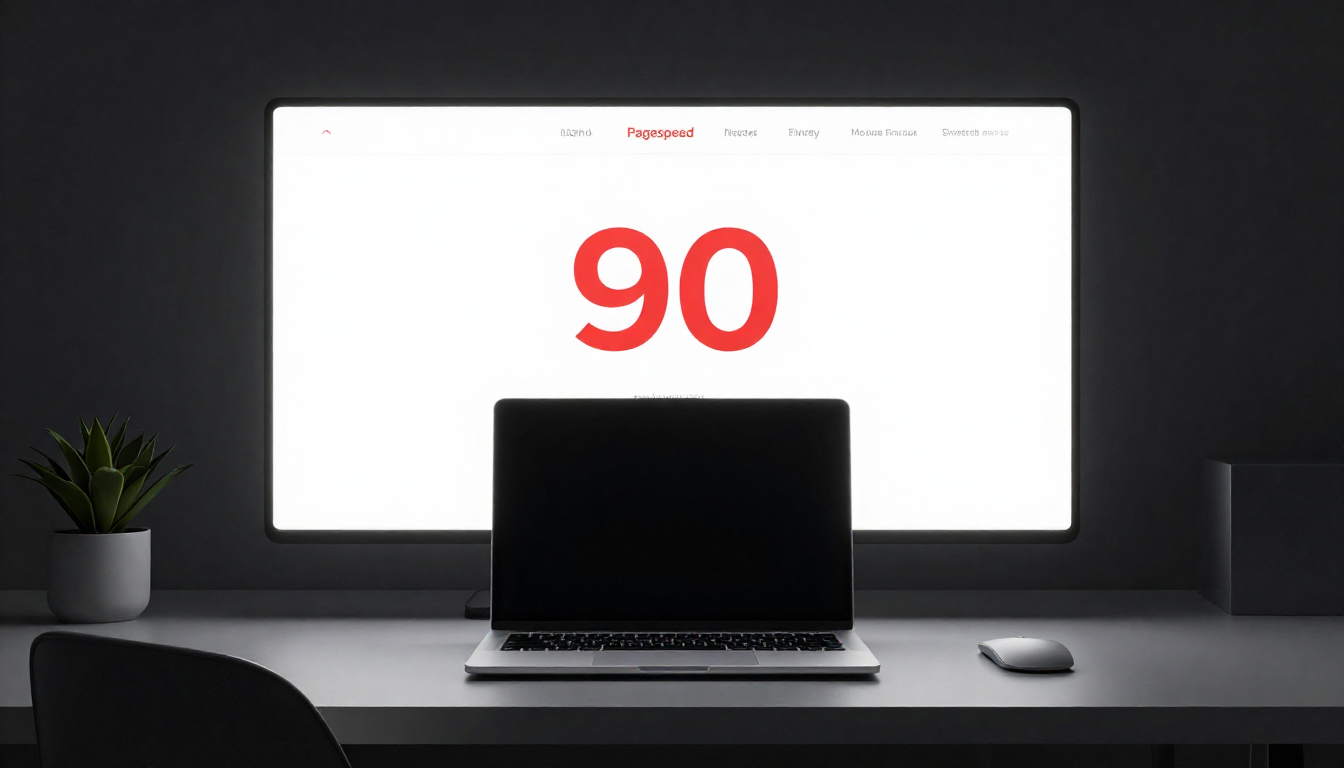
Why a 90+ PageSpeed Score Matters for Your Business

Imagine walking into a shop where the doors take five seconds to open. Chances are, you’d turn around and leave before ever seeing what was inside. That’s exactly what happens online when a website loads slowly. In today’s digital-first world, speed isn’t simply a technical metric—it’s one of the biggest factors influencing user experience, search engine rankings and, ultimately, your bottom line.

A Google PageSpeed score of 90 or higher is widely regarded as an indicator of a well-optimised website. It demonstrates that your site delivers a fast, seamless experience for visitors while meeting many of Google’s performance best practices. More importantly, it helps improve customer satisfaction, increases conversions and gives your business a competitive advantage in both traditional search results and AI-powered search experiences.

Whether you’re running an eCommerce store, a service-based business or a startup, every second counts. Even a one-second delay in loading time can result in fewer enquiries, abandoned shopping carts and lower search rankings. The good news is that modern optimisation techniques and AI-powered web development now make it easier than ever to build lightning-fast websites without sacrificing design or functionality.

In this guide, you’ll learn why PageSpeed matters, how it directly impacts SEO, conversions and user trust, and how KNOWN DESIGN and KNOWN AI help businesses consistently achieve PageSpeed scores of 90+ while delivering exceptional digital experiences.

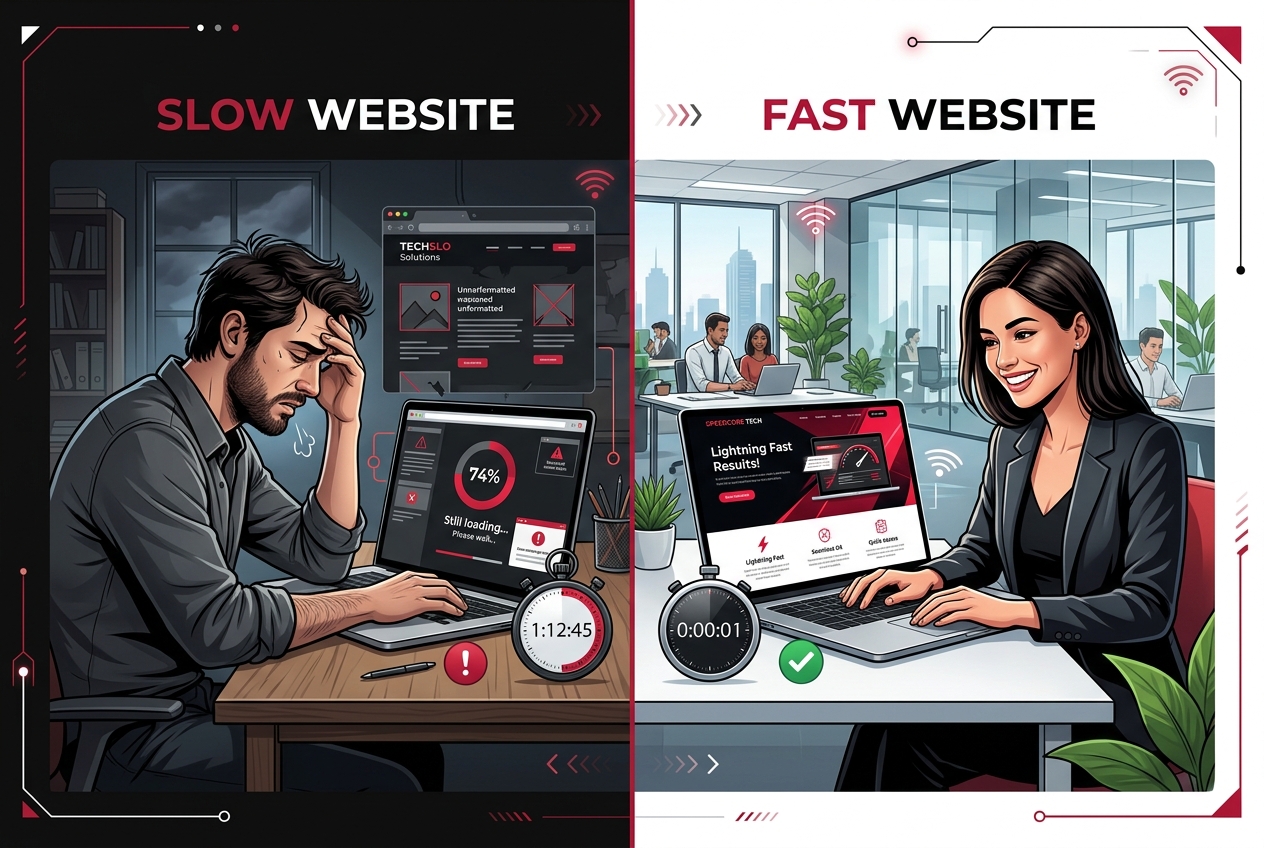
Split-screen illustration contrasting slow vs fast websites: frustrated man at a dark desk with slow-loading screens on the left and a cheerful woman at a bright desk with a fast-loading page on the right.

The Business Case for a 90+ PageSpeed Score

Many businesses assume PageSpeed is simply a technical score for developers. In reality, it has a direct impact on revenue, customer experience and online visibility.

Google has long prioritised website performance as part of its ranking algorithms, particularly since introducing Core Web Vitals. Websites that load quickly provide a better experience for users, making them more likely to rank higher, keep visitors engaged and convert traffic into paying customers.

Research has consistently shown that users expect websites to load almost instantly. If a page takes too long, visitors often leave before engaging with any content, regardless of how good the product or service may be.

For businesses competing online, speed is no longer optional—it’s a competitive advantage.

Why Every Second Matters

Think about your own browsing habits. When a website feels slow, you probably click the back button and choose another result. Your customers behave exactly the same way.

Every additional second of loading time creates friction in the customer journey, increasing the likelihood that visitors will abandon your website before completing an enquiry, booking a service or making a purchase.

  • Slow websites lose potential customers before they even see your offer.
  • Fast websites create a smoother, more enjoyable browsing experience.
  • Better experiences lead to higher engagement and stronger customer trust.
  • Improved performance contributes to better search visibility over time.

Conversion Optimisation Starts With Speed

Your website exists to achieve business goals—whether that’s generating leads, selling products or encouraging enquiries. Website speed directly influences how successfully it achieves those goals.

Numerous industry studies have demonstrated that even small improvements in loading speed can significantly increase conversion rates. Faster websites reduce friction throughout the customer journey, allowing users to move naturally from discovery to action without unnecessary delays.

For startups and growing businesses, improving website speed often delivers one of the highest returns on investment because it enhances every stage of the marketing funnel.

Benefits of a Faster Website

  • Higher lead generation.
  • Increased online sales.
  • Lower bounce rates.
  • Longer average session durations.
  • Greater customer satisfaction.
  • Improved mobile usability.
  • Higher return visitor rates.

Speed Builds Trust

Consumers associate fast websites with professional, reliable businesses. A slow-loading website can unintentionally suggest poor quality, outdated technology or a lack of attention to detail—even if your products or services are excellent.

First impressions happen within seconds. When visitors experience a fast, responsive website, they’re more likely to trust your brand, explore additional pages and feel confident about doing business with you.

This is especially important for startups, where credibility and trust play a significant role in converting first-time visitors into loyal customers.

How Website Speed Impacts SEO

Search Engine Optimisation (SEO) is about much more than keywords and backlinks. Google also evaluates how quickly and efficiently your website performs. A fast website helps search engines crawl your content more effectively while providing users with a better browsing experience.

Since Google’s Page Experience update, website performance has become an important ranking consideration. While PageSpeed alone won’t guarantee a number one ranking, it plays a significant role when combined with high-quality content, strong technical SEO and a positive user experience.

Simply put, if two websites offer similar content, the faster website is more likely to earn higher rankings and keep visitors engaged.

Why Google Rewards Fast Websites

  • Improved user experience.
  • Lower bounce rates.
  • Better mobile performance.
  • More efficient crawling and indexing.
  • Higher engagement signals.
  • Greater accessibility across different devices and internet speeds.

As Google’s algorithms continue to evolve, website performance remains a key indicator of quality. Businesses that invest in speed today are building a stronger foundation for future search visibility.

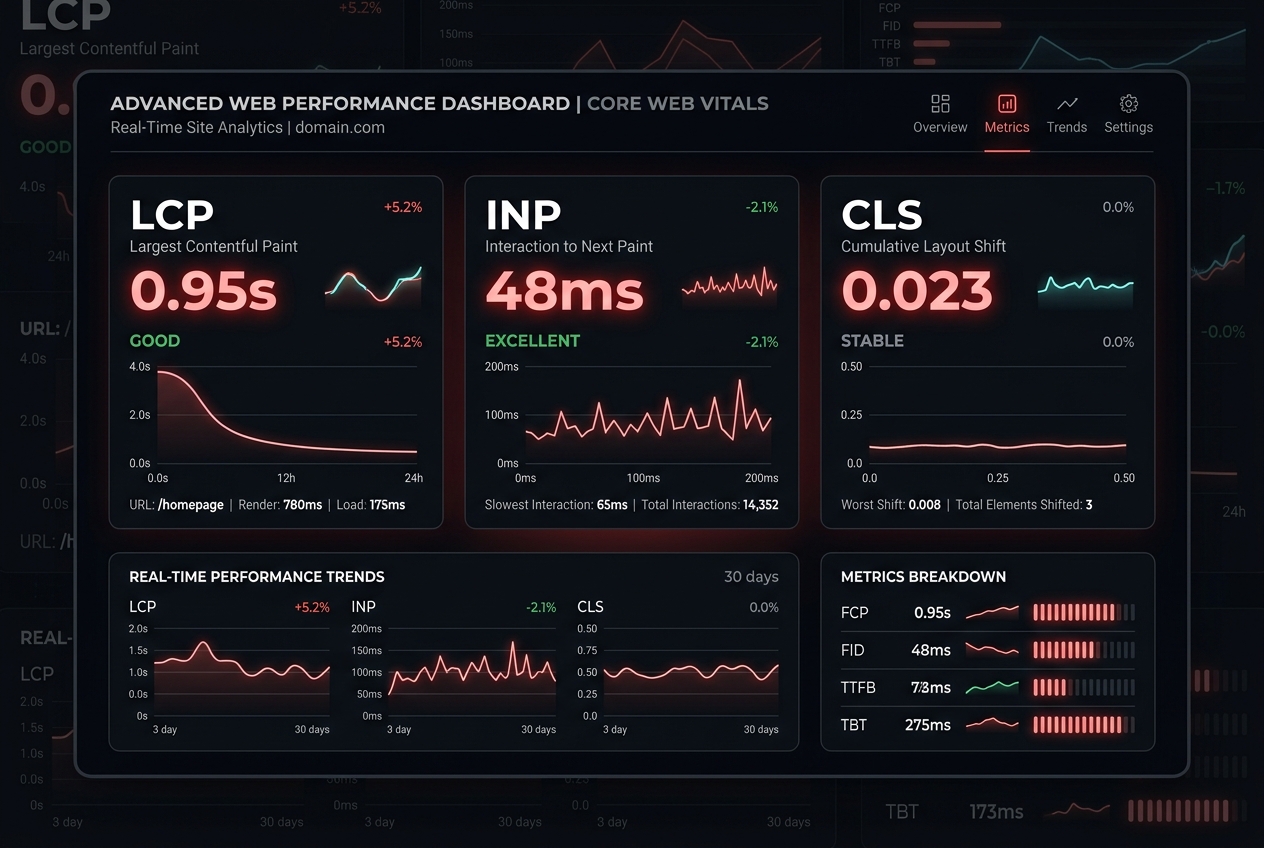
Dark web performance dashboard showing LCP 0.95s, INP 48ms, CLS 0.023 with charts and trends are displayed in panels.

Understanding Core Web Vitals

If you’ve ever used Google PageSpeed Insights, you’ve probably come across the term Core Web Vitals. While it sounds technical, the concept is surprisingly simple.

Core Web Vitals are Google’s way of measuring how enjoyable your website is to use. Rather than focusing solely on how quickly a page loads, these metrics evaluate how users actually experience your website.

Largest Contentful Paint (LCP)

LCP measures how quickly the largest visible element on your page appears. This could be your hero banner, a featured image or a large block of text.

A fast LCP reassures visitors that your website is loading correctly and encourages them to stay on the page.

Interaction to Next Paint (INP)

INP measures how responsive your website feels when users click buttons, open menus or submit forms.

If visitors click a button and nothing happens for several seconds, frustration quickly builds. A low INP ensures your website feels smooth, responsive and professional.

Cumulative Layout Shift (CLS)

CLS measures visual stability. Have you ever tried clicking a button only for the page to suddenly shift, causing you to click the wrong thing instead? That’s poor CLS.

A stable layout creates a polished user experience and prevents accidental clicks or unnecessary frustration.

Problem vs Solution

The Problem

Many businesses unknowingly operate websites that are slowing down their growth.

  • Large, unoptimised images.
  • Bloated website builders.
  • Too many plugins.
  • Poor hosting infrastructure.
  • Unused CSS and JavaScript.
  • Outdated WordPress themes.
  • No caching or image optimisation.

These issues often result in slow-loading pages, frustrated visitors and missed business opportunities.

The Solution

KNOWN AI has been engineered with performance at its core. Instead of treating optimisation as an afterthought, every website is built using modern techniques that maximise speed from the very beginning.

Combined with the expertise of KNOWN DESIGN, businesses receive a website that’s not only visually impressive but also technically optimised for long-term success.

  • AI-compressed images in next-generation formats.
  • Clean, lightweight code.
  • Lazy loading for media and resources.
  • Critical CSS loading.
  • Optimised hosting infrastructure.
  • Built-in technical SEO.
  • Responsive design across all devices.

Slow Website vs High-Performance Website

Slow Website

  • Visitors leave before the page finishes loading.
  • Higher bounce rates.
  • Lower search visibility.
  • Reduced conversions.
  • Poor mobile experience.
  • Negative first impressions.

90+ PageSpeed Website

  • Visitors can access information almost immediately.
  • Improved engagement and longer session durations.
  • Stronger SEO foundation.
  • Higher lead generation and online sales.
  • Optimised performance across all devices.
  • Professional, trustworthy brand perception.

Real-World Example

Imagine two businesses offering identical services.

The first website takes five seconds to load. Visitors become impatient, leave before viewing the service pages and choose a competitor instead.

The second website loads almost instantly. Navigation feels smooth, pages respond quickly and customers effortlessly find the information they need before submitting an enquiry.

Although both businesses offer the same service, the faster website creates a significantly better customer experience, increasing the likelihood of enquiries, sales and repeat visits.

That’s the true value of investing in website performance—it improves every interaction your customers have with your brand.

How KNOWN AI Delivers 90+ Google PageSpeed Scores

Achieving a PageSpeed score of 90 or higher doesn’t happen by chance. It requires careful planning, modern development practices and continuous optimisation. While many website builders prioritise convenience, KNOWN AI has been engineered with performance as a core principle from the very beginning.

By combining intelligent automation with proven web development techniques, KNOWN AI enables businesses to launch websites that are not only visually impressive but also exceptionally fast, responsive and search-engine friendly.

Optimised Images From the Start

Images are often the largest files on any website and one of the biggest causes of slow loading times. KNOWN AI automatically optimises images during the website creation process, reducing file sizes without noticeably affecting quality.

Images are served in modern formats such as WebP and AVIF, helping pages load faster while using less bandwidth across desktop and mobile devices.

Critical CSS Loading

Rather than loading every stylesheet at once, KNOWN AI prioritises the styles required for the visible portion of the page first. This technique, known as Critical CSS, allows visitors to see content almost immediately while the remaining styles load in the background.

The result is a website that feels significantly faster, even before every asset has finished downloading.

Intelligent Lazy Loading

Not every image or video needs to load the moment a visitor opens your website. KNOWN AI uses lazy loading to delay off-screen resources until they are actually needed.

This dramatically reduces initial page weight, improves loading times and creates a smoother browsing experience without sacrificing visual quality.Global Cloud Hosting

Website speed isn’t determined by design alone—hosting infrastructure also plays a critical role. KNOWN AI offers reliable cloud hosting across the United Kingdom, Europe and the United States, helping reduce latency for visitors around the world.

By serving content from data centres closer to your audience, websites load faster regardless of where customers are located.

Technical SEO Built In

Fast websites are only part of the equation. KNOWN AI also incorporates technical SEO best practices during the build process, providing businesses with a strong foundation for long-term search visibility.

  • Clean semantic HTML.
  • Optimised metadata.
  • Structured heading hierarchy.
  • SEO-friendly URLs.
  • Responsive layouts.
  • Schema-ready page structures.
  • Core Web Vitals optimisation.

Rather than spending weeks fixing technical issues after launch, businesses start with a website that’s designed to perform from day one.

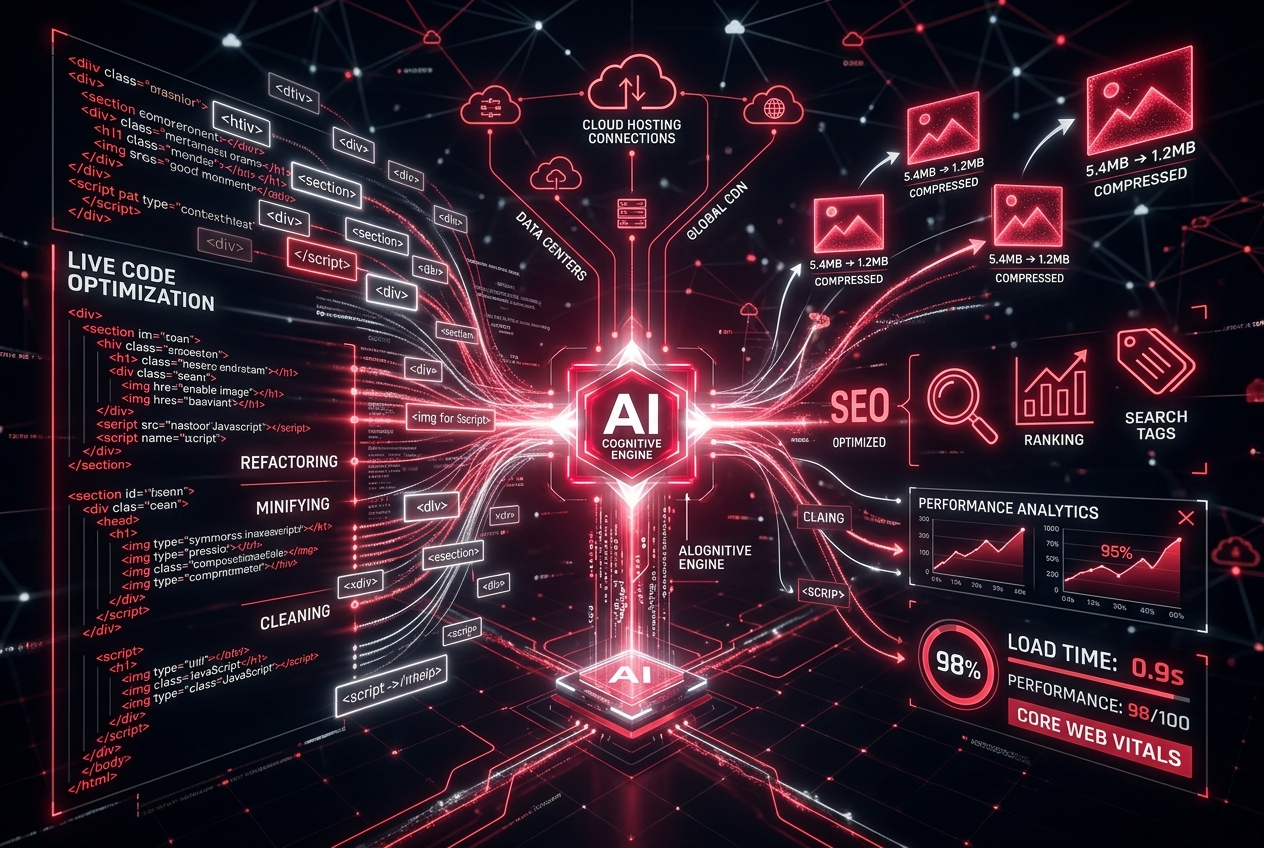
Futuristic AI dashboard with glowing data streams from a central AI engine, showing code, analytics, and SEO icons.

Why Website Performance Matters in the Age of AI Search

Search is evolving rapidly. Increasingly, users are turning to AI-powered platforms such as ChatGPT, Google AI Overviews, Microsoft Copilot and Gemini to answer questions, compare products and discover businesses.

These AI systems favour content that is well structured, easy to understand and hosted on websites that provide an excellent user experience. Fast-loading pages support that experience by allowing users—and search engines—to access information quickly and efficiently.

This is where SEO, Answer Engine Optimisation (AEO) and Generative Engine Optimisation (GEO) work together. A technically sound website with fast loading speeds, clear content and logical structure is better positioned to be discovered by both traditional search engines and AI-driven search experiences.

More Than Just a Fast Website

A high PageSpeed score is valuable, but it’s only one part of a successful digital strategy. Businesses also need websites that reflect their brand, engage visitors and encourage action.

KNOWN DESIGN combines over 12 years of award-winning web design experience with the power of KNOWN AI to deliver websites that are both visually striking and technically outstanding.

Clients benefit from a complete digital solution, including:

  • Branding Design.
  • Professional Website Design.
  • Agentic AI Website Builder.
  • Custom Website Development.
  • Custom AI Website Development.
  • Custom WordPress Theme Development.
  • Performance & Core Web Vitals Optimisation.
  • Data Analytics & Tracking Implementation.
  • Answer Engine Optimisation (AEO).

Whether you’re launching a startup, refreshing an existing website or scaling an established business, KNOWN DESIGN provides the expertise needed to create a digital presence that performs today while preparing for tomorrow’s search landscape.

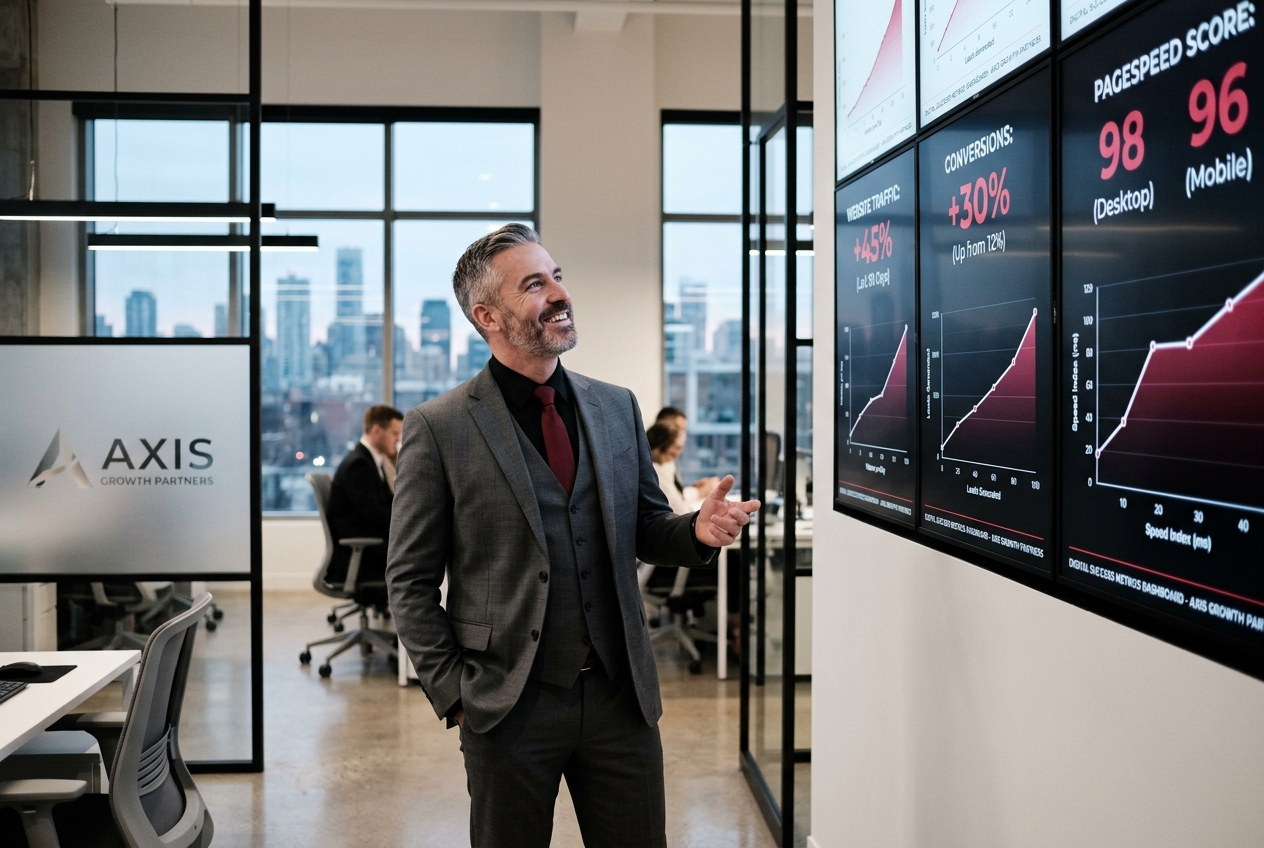
Man in a gray suit and red tie smiles as he gestures toward wall-mounted graphs in a modern office.

Investing in Performance Is Investing in Growth

Every improvement in website speed creates opportunities to generate more enquiries, improve customer satisfaction and strengthen your online reputation.

Rather than viewing PageSpeed as a technical score, successful businesses recognise it as an investment in user experience, marketing performance and long-term growth.

When your website loads quickly, visitors stay longer, engage more deeply and are far more likely to become paying customers.

Frequently Asked Questions

What is a good Google PageSpeed score?

Google considers a PageSpeed Insights score of 90–100 to be excellent. While the score itself isn’t the only ranking factor, achieving 90 or above usually indicates that your website follows modern performance best practices, providing visitors with a fast, responsive and enjoyable browsing experience.

Does PageSpeed affect SEO?

Yes. Website speed is one of many factors that contribute to search performance. Faster websites typically offer better user experiences, lower bounce rates and improved Core Web Vitals, all of which support stronger SEO and help search engines crawl and index your content more efficiently.

Can WordPress achieve a 90+ PageSpeed score?

Absolutely. With the right hosting, lightweight themes, image optimisation, caching and clean development practices, WordPress websites can consistently achieve PageSpeed scores above 90. The key is avoiding unnecessary plugins and ensuring the website is built with performance in mind from the start.

What are Core Web Vitals?

Core Web Vitals are Google’s performance metrics that measure loading speed, responsiveness and visual stability. They help assess how users experience your website and are an important part of delivering a fast, user-friendly digital experience across desktop and mobile devices.

How does KNOWN AI help improve website performance?

KNOWN AI is engineered for speed using modern optimisation techniques, including image compression, lazy loading, Critical CSS, semantic HTML and cloud hosting infrastructure. Combined with the expertise of KNOWN DESIGN, businesses receive websites that are fast, visually engaging and built for long-term SEO success.

Looking to get even more from AI-powered web development?

Read our related step by step guide: How To Write The Perfect AI Prompt to Build Your Dream Website

From unKNOWN to KNOWN

A fast website is no longer a luxury—it’s a business necessity. From improving user experience and increasing conversions to strengthening SEO and supporting AI-powered search, website performance plays a crucial role in your online success.

Achieving a Google PageSpeed score of 90 or higher isn’t about chasing a number. It’s about creating a website that delivers value to every visitor, every time they interact with your brand.

With KNOWN AI’s intelligent website builder and the award-winning expertise of KNOWN DESIGN, businesses can enjoy the perfect combination of speed, innovation and professional craftsmanship. Whether you’re launching a new startup, redesigning an existing website or preparing for the future of AI-powered search, investing in performance today will continue paying dividends for years to come.

Ready to Supercharge Your Website?

If your current website is slow, underperforming or struggling to generate results, now is the perfect time to make a change.

KNOWN DESIGN offers a complete suite of digital services, including Branding Design, Website Design, Custom Website Development, Custom AI Website Development, WordPress Theme Development, Performance & Core Web Vitals Optimisation, Data Analytics & Tracking Implementation and Answer Engine Optimisation (AEO).

Looking for a faster, more affordable way to launch your business online? Experience the power of KNOWN AI with a three-day free trial and discover how intelligent automation, combined with expert human refinement, can help your business launch faster, rank higher and convert more visitors into customers.

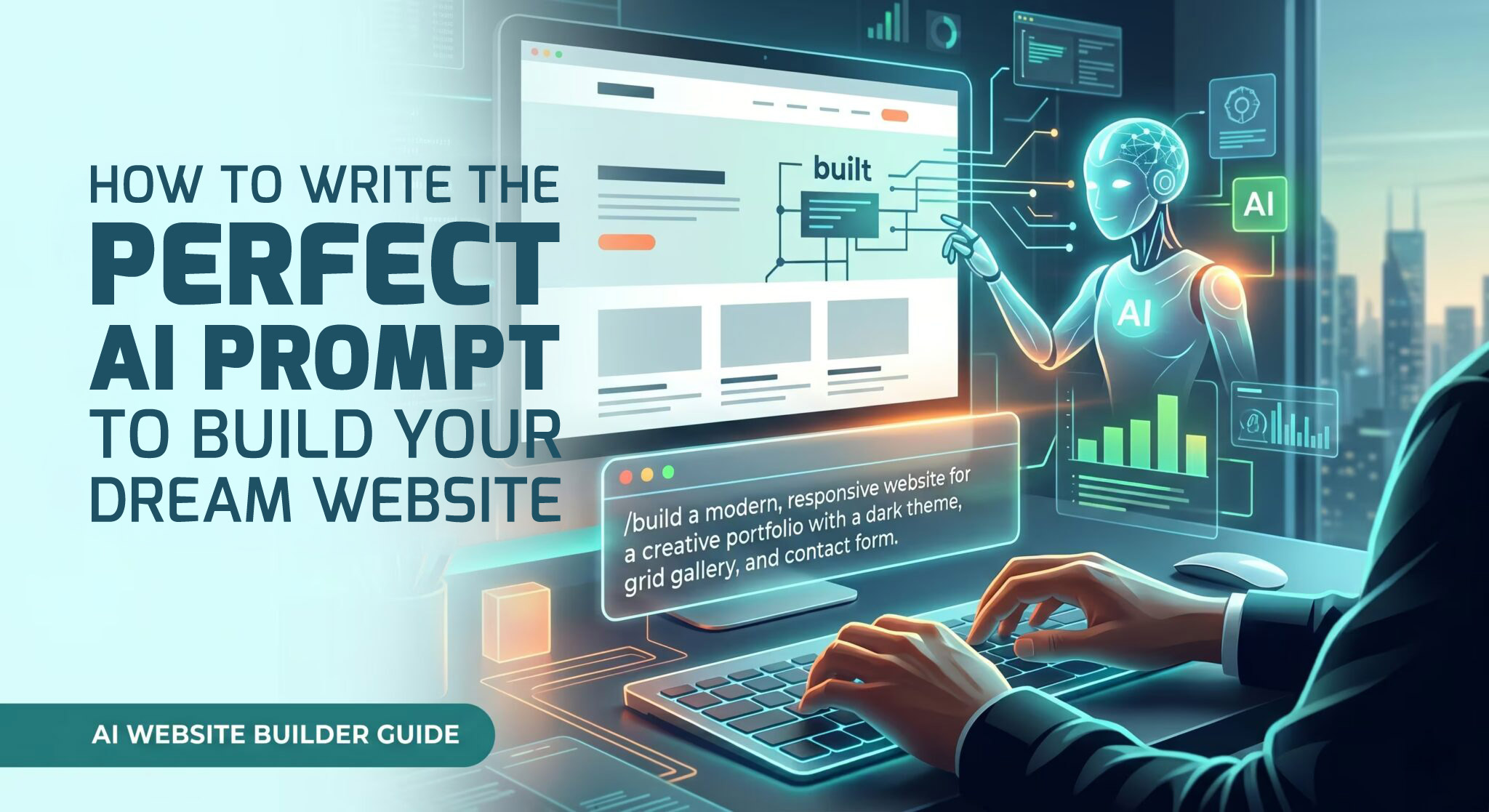
How to Write the Perfect AI Prompt to Build Your Dream Brochure or E-commerce Website

The perfect AI website prompt includes five things: Your business type, your target audience, your goal, your preferred style, and the specific pages and functionality or features that you need.

The more specific you are, the faster KNOWN AI builds exactly what you imagined.

Close-up of a person holding a smartphone; the screen shows blurred, code-like text on a dark background.

What Is an AI Website Prompt and Why Does It Matter?

When you build a website with KNOWN AI, you don’t need to touch a single line of code, struggle with templates, or hire a web designer.

You simply describe your website in plain English and our AI builds it for you in minutes.

That description is your prompt.

Think of it like giving instructions to the world’s fastest, most talented web designer. The clearer and more detailed your brief, the better the result.

A vague prompt like “make me a nice website” will produce something generic.

A specific, well-structured prompt will produce a professional website that looks and feels like it was built precisely for your business.

The global AI-powered website builder market is driven by small businesses, choosing speed and affordability without sacrificing professionalism.

The difference between a business that gets a great result and one that doesn’t almost always comes down to the quality of the initial prompt.

This guide shows you exactly how to write one.

Close-up of a hand touching a touchscreen displaying an AI tool menu with rounded blue option cards on the left side

The Five Elements of a Perfect AI Website Prompt

Every great KNOWN AI prompt includes these five elements.

Miss one and the AI fills the gap with a generic assumption.

Include all five and the result will feel tailor-made.

1. Your Business Type and Industry

Tell the AI exactly what kind of business you run.

Be specific. Don’t just say “a shop.” 

Include as much detail as possible like “a handmade candle shop” or “a family-run Italian restaurant in Bristol.”

2. Your Target Audience

Who is your ideal customer?

A B2B SaaS company targeting decision-making HR directors needs a completely different website to a yoga studio targeting local Mums.

The more details you provide, the better the AI can deliver.

Specify the kind of business, the purpose of the website, and any unique elements you’d like to see.

3. Your Primary Goal

What do you want visitors to do when they land on your site? 

Book a call? 

Buy a product? 

Download a brochure? 

Fill in a contact form? 

Every design decision the AI makes, from the layout and button placement, to calls to action (CTA) flows from this single answer.

4. Your Style and Brand Feel

Describe the look and feel you want. 

You can reference colours, moods, or even other websites you admire. 

Words like “clean and minimal,” “bold and confident,” “warm and approachable,” or “professional and corporate” give the AI powerful creative direction.

5. Your Required Pages and Features

List the specific pages and features your site needs. 

A homepage and contact page is the minimum.

Should you also have a services page? A portfolio page? A product catalogue? A booking system? 

State your exact requirements clearly.

Person typing on a laptop with one hand on the keyboard and the other on a mouse nearby.

The KNOWN AI Prompt Formula

Here is the simple formula we recommend for every prompt you write in Known Design AI:

“Create a [style] website for [business type] targeting [audience]. 

The primary goal is [goal]. 

Pages needed: [list pages]. 

Features needed: [list features]. 

Brand feel: [describe aesthetic]. 

Colour palette: [colours or direction].”

Simple. Clear. Effective. 

Let’s now see it applied to the two most common website types: Brochure websites and E-commerce websites.

Part One: How to Prompt for the Perfect Brochure Website

A Brochure website is a digital shop window. 

Its job is to tell visitors who you are, what you do, why you’re the best choice, and how to get in touch. 

Think of it as your 24/7 sales representative that’s always available, always on-brand, never calling in sick.

Brochure websites are ideal for:

  • Service businesses (Consultants, Accountants, Solicitors, Therapists, Cleaners.)
  • Trades and local businesses (Plumbers, Electricians, Builders, Landscapers.)
  • Professional practices (Dentists, Physios, Architects, Estate agents.)
  • Creative freelancers (Photographers, Designers, Copywriters.)
  • Charities and non-profits.

What Makes a Great Brochure Website Prompt?

Brochure Website Prompt Examples

Example 1: Local Trades Business

For a brochure site, your prompt needs to emphasise trust signals, clear service descriptions, and an obvious contact or booking mechanism. 

The AI needs to understand not just what you do but why a visitor should choose you over your competitors.

Key things to include in a brochure website prompt:

  • Your location (Local SEO depends on it.)
  • Your core services or specialisms.
  • Your unique selling points (What makes you different?)
  • The trust signals you want featured (Years in business, accreditations, testimonials, awards.)
  • How you want visitors to get in touch (Call, form, booking link)


Prompt Example: “Create a professional, trustworthy website for a family-run electrical company in Manchester with 20 years of experience. Target audience: homeowners and small business owners in Greater Manchester. Primary goal: get visitors to call or request a free quote. Pages needed: Home, Services (rewiring, consumer units, EV chargers, PAT testing), About Us, Testimonials, Contact. Brand feel: reliable, safe, local, established. Colours: navy blue and white with yellow accents. Include a prominent phone number in the header, a Google reviews badge, and a ‘Get a Free Quote’ button on every page.”

Example 2: Professional Services Firm

Prompt Example: “Create a clean, authoritative website for a boutique HR consultancy based in London targeting SMEs with 10 to 250 employees. Primary goal: generate enquiries for a free 30-minute discovery call. Pages needed: Home, Services (HR strategy, employment contracts, disciplinary support, TUPE), About, Case Studies, Blog, Contact. Brand feel: professional, calm, modern, trustworthy. Colours: slate grey, white, and a deep teal accent. Include a calendar booking widget on the Contact page and a clear headline that communicates the value proposition above the fold.”

Example 3: Creative Freelancer

Prompt Example: “Create a portfolio website for a freelance brand photographer based in Edinburgh targeting lifestyle and food brands. Primary goal: attract enquiries for commercial shoots. Pages needed: Home, Portfolio (food, lifestyle, product categories), Services and Pricing, About, Contact. Brand feel: editorial, elegant, film-inspired, minimal. Colours: warm cream, charcoal, and dusty rose. Feature a large full-width hero image, a horizontal scroll gallery, and a contact form with a project enquiry brief.”

Person in dark suit uses a holographic touchscreen to view virtual clothes, including a blue dress and an orange blazer, in a futuristic shopping interface.

Pro Tips for Brochure Website Prompts

Part Two: How to Prompt for the Perfect E-Commerce Website

Lead with your location: 

Known AI will incorporate local SEO signals into your content but only if you tell it where you are.

“A plumber in Birmingham” produces a very different site to “a plumber.” Local search intent is some of the highest-converting traffic on the web.

Name your trust signals explicitly: 

Don’t assume the AI will invent credibility for you. 

If you have been trading for 15 years, have 200 five-star reviews, or hold a specific accreditation, say so in the prompt. 

The most successful AI builders work iteratively, so start with your essential purpose and two or three must-have features, then refine from there.

One clear call to action per page: 

Tell the AI what single action you want each page to drive. 

A homepage should drive enquiries. 

A services page should drive clicks to contact. 

Confusion kills conversions.

Describe your ideal client, not your business: 

The more precisely you describe who your website is for, the better the AI calibrates the language, tone, and layout to appeal to that person.

An E-commerce website has one job above all others: sell. 

Every design decision from layout, image placement, button colour and product page structure to checkout flow exists to move a visitor from browsing to buying as smoothly as possible.

E-commerce prompts require more detail than brochure prompts because the stakes are higher and the complexity is greater.

A weak e-commerce prompt produces a generic shop that fails to convert.

A strong one produces a store that works hard for your business around the clock.

E-commerce websites built with Known AI are ideal for:

  • Product-based businesses selling physical goods.
  • Digital product sellers (courses, templates, downloads.)
  • Subscription box businesses.
  • Artisan makers and independent brands.
  • B2B wholesalers needing a trade portal.

What Makes a Great E-Commerce Prompt?

For an e-commerce site, your prompt needs to convey:

  • What you sell?: With enough detail that the AI structures the right product categories.
  • How you sell?: One-off purchases, subscriptions, bundles, digital downloads.
  • Who buys from you?: Their demographics, motivations, and what drives their purchase decision.
  • Your brand’s visual identity?: Product photography style, colour palette, typography feel.
  • The conversion journey?: How a first-time visitor moves from landing page to checkout.
  • Trust and social proof?: Reviews, guarantees, security badges, returns policy prominence.


Start with detailed prompts, then refine through iteration.

Most AI builders let you regenerate sections or request modifications.

E-Commerce Website Prompt Examples

Example 1: Artisan Product Brand

Prompt Example: “Create a premium e-commerce website for a small-batch skincare brand selling natural face oils and serums to women aged 28 to 45 who prioritise clean beauty and sustainability. Primary goal: drive product sales and build a subscriber email list. Pages needed: Home, Shop (all products), Individual Product Pages, Our Story, Ingredients and Values, Blog, Contact. Features needed: product filtering by skin type, a bundle builder, email capture popup with a first-order discount, a reviews section on every product page, free shipping threshold banner, and a sticky cart icon. Brand feel: spa-like, luxurious, earthy, and organic. Colours: warm off-white, sage green, and terracotta. Style: editorial photography, generous white space, minimal sans-serif fonts.”

Example 2: Fashion and Apparel

Prompt Example: “Create a modern fashion e-commerce website for an independent womenswear brand targeting style-conscious women aged 20 to 38 in the UK. Primary goal: sell clothing and grow an Instagram-driven audience. Pages needed: Home, New In, Collections (summer, workwear, going out), Sale, Size Guide, Sustainability, About, Contact. Features needed: size filtering, wish list functionality, recently viewed products, Instagram feed integration, a ‘Complete the Look’ section on product pages, abandoned cart prompts, and a clearly visible returns policy. Brand feel: aspirational but accessible, cool, confident, trend-led. Colours: black, cream, and a bold red accent. Style references: Net-a-Porter meets ASOS — editorial photography with clean product shots.”

Example 3: B2B Wholesale / Trade Site

Prompt Example: “Create a professional e-commerce website for a UK-based wholesale coffee supplier selling to independent cafés, restaurants, and offices. Primary goal: drive trade account sign-ups and repeat wholesale orders. Pages needed: Home, Products (single origin, blends, decaf, equipment), Trade Account Application, Brewing Guides, About, Contact. Features needed: trade pricing visible only to logged-in account holders, minimum order quantity notices, case quantity selectors, PDF price list download, a brewing guide resource library, and a live chat widget. Brand feel: professional, passionate, knowledgeable, artisan. Colours: deep espresso brown, cream, and burnt orange. Style: clean and content-rich, with strong product photography and lots of supporting copy about provenance and quality.”

Example 4: Digital Products and Online Courses

Prompt Example: “Create a high-converting e-commerce website for a personal finance educator selling online courses and downloadable budget planners to millennials aged 25 to 40 who want to get out of debt and build savings. Primary goal: sell course enrolments and digital downloads. Pages needed: Home, Courses (overview and individual course pages), Free Resources, About, Testimonials, FAQ, Contact. Features needed: a video sales letter on the homepage, countdown timers for limited-time offers, a secure member login area, testimonial carousels with before-and-after stories, a money-back guarantee badge, and Stripe payment integration. Brand feel: empowering, optimistic, modern, relatable. Colours: sunshine yellow, white, and charcoal. Style: clean and energetic with bold typography and friendly photography of the course creator.”


Pro Tips for E-Commerce Prompts

Describe your product range in detail: 

Vague prompts produce vague results.

Instead of “an online shop with products,” try “a homepage showcasing featured products, individual product pages with size guides, an about page explaining sustainable practices, and a blog for styling tips.”

The AI needs to understand your catalogue structure to build the right navigation and filtering system.

Specify your conversion mechanics explicitly:

Tell the AI exactly where you want trust signals placed (above the fold, on product pages, at checkout), where your email capture should appear, and what your primary and secondary calls to action are on each page.

Tell the AI about your customer’s buying hesitations:

Every e-commerce customer has objections before they buy, like price, quality, fit, delivery time, returns.

If you name these in your prompt, the AI will incorporate trust-building elements that address them directly.

For example: “Customers often worry about sizing — include a detailed size guide and a ‘model measurements’ note on every product page.”

Include your fulfilment and delivery details:

Shipping thresholds, delivery timescales, and returns policies are major purchase drivers.

Mentioning them in your prompt ensures they’re placed prominently where they’ll do the most conversion work.

State your upsell and cross-sell strategy:

If you want “Customers also bought” sections, bundle deals, or complementary product recommendations, say so.

These features can increase average order value significantly and Known AI can structure them from the start if you include them in the prompt.

Bearded man in a brown shirt sits at a desk, hands raised in celebration while looking at a monitor displaying code.

Common Prompting Mistakes to Avoid

Whether you’re building a brochure site or an e-commerce store, these are the most common mistakes that lead to disappointing first results… and how to fix them.

MistakeWhy It HurtsFix
Being too vagueThe AI makes generic assumptionsAdd business type, audience, goal, and style in one prompt
No locationMisses local SEO opportunitiesAlways include your city or region
No call to action specifiedThe site doesn’t convertState exactly what action you want on each page
No style guidanceGeneric, templated feelUse three to five descriptive words for brand feel plus colour direction
Listing everything at onceOverwhelming, loses priorityLead with your single most important goal, then list supporting features
Forgetting mobileMost visitors browse on phonesAdd “mobile-first” or “optimised for mobile” to your prompt
Not iteratingAccepting the first outputUse Known Design AI’s refinement prompts to adjust sections one at a time
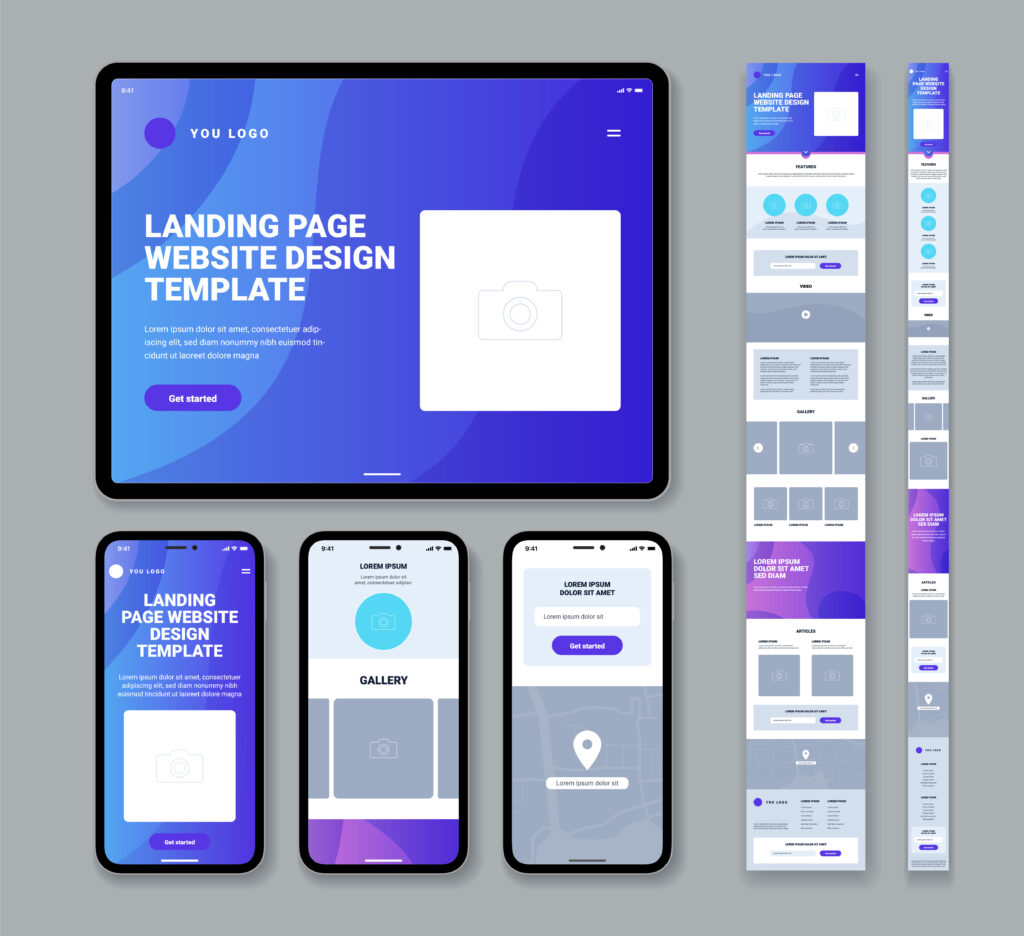
Mockup showing a blue gradient landing page design on tablet and smartphone screens side by side and in a vertical grid to illustrate a responsive template.

How to Refine Your Website After the First Generation

Your first AI-generated website is a strong starting point, not a finished product.

Once you have a solid base, refine through follow-up prompts that adjust spacing, swap colour schemes, or reorganise sections. Known AI’s co-pilot makes this simple:

  • “Change the hero section headline to focus on our free delivery offer.”
  • “Make the services section a three-column grid instead of a list.”
  • “Add a testimonials section between the About section and the Contact form.”
  • “Change the colour palette to deep navy and gold.”
  • “Rewrite the About page in a warmer, more conversational tone.”

Think of it as a conversation with your designer.

Each refinement prompt narrows the gap between what the AI generated and your exact expectations.

Close-up of a hand typing on a laptop keyboard, with white cables and a mug on a dark wooden desk; a 'Search' bar overlay on screen.

Quick Reference: Prompt Templates to Copy and Customise

Brochure Website Starter Template

“Create a [clean / bold / warm / professional] website for a [your business type] based in [your location] targeting [your ideal customer]. Primary goal: [get a call / generate enquiries / book appointments / download a brochure]. Pages: Home, About, Services ([list your services]), Testimonials, Contact. Trust signals: [years in business / accreditations / awards / number of clients]. Brand feel: [three describing words]. Colours: [your palette]. Call to action: [your CTA text].”

E-Commerce Website Starter Template

“Create a [premium / modern / playful / minimal] e-commerce website for [your brand name] selling [your products] to [your target audience]. Primary goal: [drive sales / grow subscribers / build trade accounts]. Pages: Home, Shop, [product category pages], About, [Blog if relevant], Contact. Features: [product filtering / size guide / reviews / wishlist / email capture / free shipping banner / returns policy]. Brand feel: [three describing words]. Colours: [your palette]. Style: [editorial / clean product shots / lifestyle photography]. Key trust signals: [money-back guarantee / secure checkout / free returns / X thousand happy customers].”

Frequently Asked Questions

How long should my prompt be?
There is no perfect length. Two to four sentences covering all five elements (business type, audience, goal, style, pages) produces excellent results in KNOWN AI website builder. Longer is only better if the extra detail is genuinely useful. Avoid padding.

Can I reference a website I like in my prompt?
Yes. You can say “similar to the style of [website URL]” or describe what you like about another site. The AI uses this as stylistic direction, not a template to copy.

What if I don’t know what colour palette I want?
Describe a mood or feeling instead, example: “warm and earthy”, “cool and corporate”, “bright and energetic”.KNOWN AI will select an appropriate palette that matches the emotional direction.

Can I change my website after KNOWN AI builds it?
Absolutely. Everything the AI generates is fully editable. You can refine any section using follow-up prompts in the co-pilot, or edit text, images, and layouts manually in your KNOWN AI dashboard.

Do I need to write a new prompt if I want to add pages later?
No. You can add pages at any time using the dashboard. You can also use the co-pilot to generate content for new pages that matches the style and tone of your existing site.

Will my AI-built website rank on Google?
KNOWN AI builds on WordPress (the world’s most widely used SEO-proven platform) with clean code, fast load times, and structured content that search engines can read. Including your location, services, and target keywords naturally in your prompt helps the AI generate content that supports strong organic rankings from day one.