
AI website builders have changed how quickly a website can go from an idea to a working first draft.
With the right prompt, businesses can now generate pages, layouts, written content and visual styles in minutes rather than starting with a blank screen.
But there is an important distinction between generating a website and finishing a website.
The first version created by an AI website builder is a starting point. Editing is what turns that starting point into a website that actually reflects a business, communicates clearly with its audience and gives visitors a reason to stay, explore and take action.
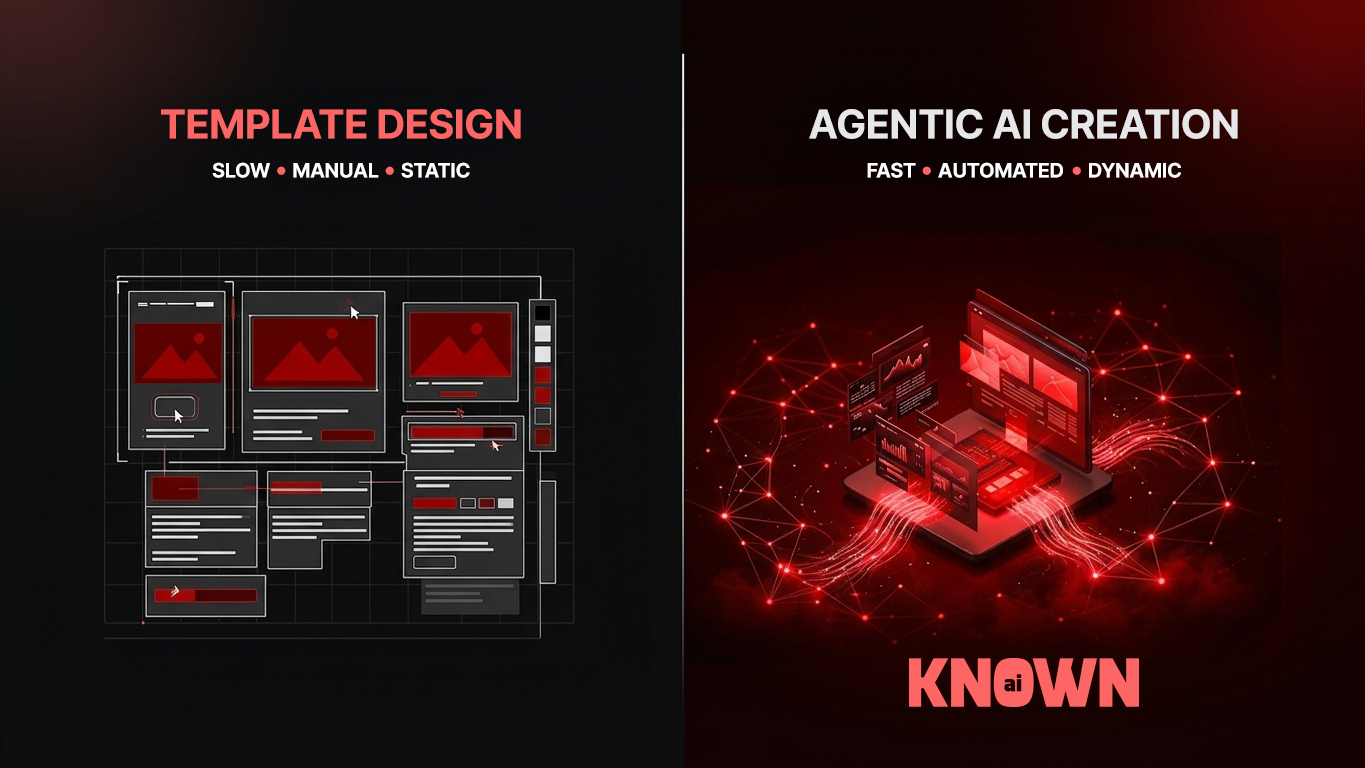
In 2026, leading AI website builders like KNOWN AI are increasingly designed around this idea.
For example, our AI website builder literally creates your customised WordPress theme based on your 2000-character prompt which describes your business and website requirements in detail.
This allows users to continue editing AI-generated websites manually or with our AI agent after the initial generation.
You have the flexibility to change layouts, specific sections on a page, colours, fonts, navigation and content.
“AI site builders take users from a prompt to an editable website that can then be refined and customised.” – Webflow.
So, if AI can build a website for you, why does editing still matter?
Because a generated website knows how to create a website. It does not automatically know your business.

AI Can Build a Website in Minutes – But That’s Only the Starting Point
One of the biggest advantages of an AI website builder is that it removes the intimidating blank page.
Instead of figuring out what pages a business needs, writing every section from scratch and deciding how everything should be arranged, users can describe what they want with a perfect 2000-character prompt and let KNOWN AI create an initial website structure.
That can be incredibly useful for a startup or small business owner who needs a website but does not have the time, budget or technical knowledge to build one from scratch.
However, speed does not eliminate the need for decision-making.
AI-generated content can make assumptions about a business. It may use wording that sounds polished but does not quite match the brand’s personality.
A generated homepage might include sections that are technically appropriate but unnecessary for that particular audience.
A call-to-action might sound generic, while an image could communicate the wrong impression entirely.
This is where editing becomes important.
Think of an AI-generated website as a first draft.
The first draft gets the ideas onto the page. Editing decides what stays, what changes and what needs to be added.
The same principle applies to the written text content for each section. Google says its systems are designed to reward helpful, reliable and people-first content, regardless of whether AI was involved in producing it.
It also warns against using generative AI to create large amounts of content without adding value for users.
The goal, therefore, is not to avoid AI. It is to use AI as part of a process that still involves human judgement.
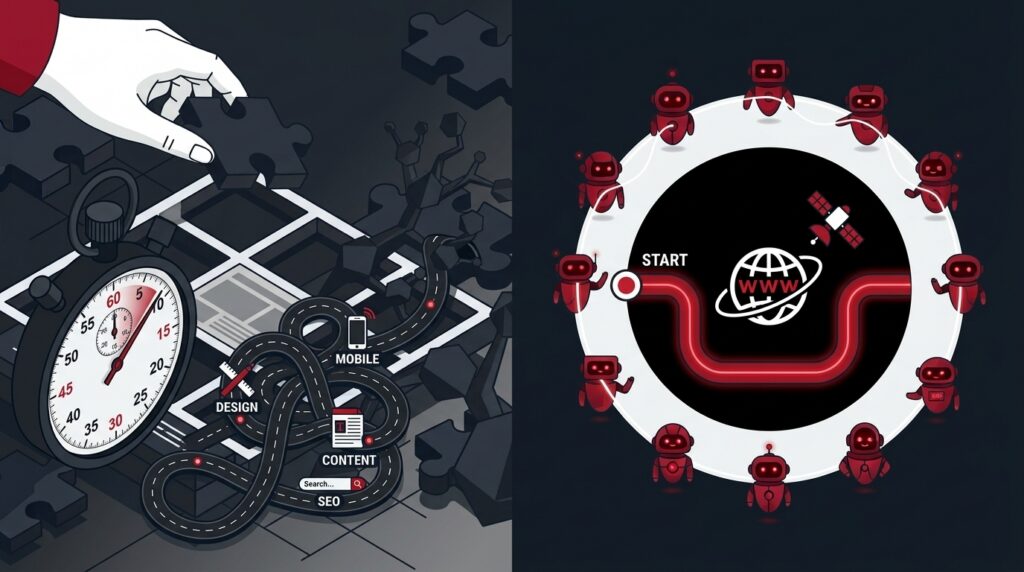
KNOWN AI helps you steal your deadlines back!

A generated website is not automatically a finished website
There are several questions worth asking before publishing an AI-generated website:
- Does the content accurately describe the business?
- Does the tone sound like the brand?
- Are the services and products explained clearly?
- Are the calls to action relevant?
- Does the navigation make sense?
- Are the images appropriate?
- Does the layout work on mobile devices?
- Is the most important information easy to find?
- Does the website give visitors enough information to make a decision?
Editing gives businesses the opportunity to answer those questions before customers do.

Why AI-Generated Websites Still Need Editing
The purpose of editing is not to make an AI-generated website look less like AI simply for the sake of it.
It is about making the website more accurate, more useful and more specific.
AI is particularly good at handling repetitive or time-consuming parts of website creation. It can generate ideas, organise information and create a strong initial structure.
Modern AI website builders can also allow users to continue making changes after generation rather than treating the first version as permanent.
But businesses are often different and have unique requirements and expectations for their long-term website goals.
A local bakery, an accounting firm, a photographer and an online retailer may all need websites, but their customers have different expectations. Their messaging, priorities, visual identities and calls to action should reflect those differences.
Editing allows a business to take an AI-generated foundation and make it genuinely its own.
Editing improves brand identity
A business website should feel connected to the brand behind it.
That does not necessarily mean changing every colour or rewriting every sentence.
Sometimes small adjustments make the biggest difference: replacing generic wording, refining the tone, choosing more appropriate imagery or adjusting the layout so the most important information receives more attention.
These decisions help move a website away from a one-size-fits-all template and towards something that feels intentional.
Editing improves accuracy
AI can generate convincing website copy, but convincing does not always mean correct.
Business names, service descriptions, prices, opening hours, contact information and other important details should be checked before a website goes live.
A small mistake on a website can create a surprisingly large problem.
An incorrect phone number can prevent a potential customer from getting in touch.
An outdated service description can create confusion. A vague claim can undermine trust.
Editing provides an essential opportunity to check the details that AI cannot independently know about a business.
Editing improves the customer experience
A website is ultimately built for the people using it.
Google’s current guidance for both traditional and generative AI search continues to emphasise useful, people-first content and a strong page experience.
Its guidance also highlights the importance of clear technical structure, crawlability, mobile usability and making important information easy for visitors to find.
Editing helps businesses look at their website from the visitor’s perspective.
Instead of asking only, “Does this website look good?”, ask:
“Can someone visiting this website quickly understand who we are, what we offer and what they should do next?”
That is a much more valuable question.

Editing Makes a Website Feel Less Generic
One of the biggest criticisms of AI-generated websites is that they can sometimes feel interchangeable.
The technology may produce a clean layout, professional-looking copy and an attractive colour palette, but a website can still feel like it could belong to almost any business in the same industry.
That is not necessarily a problem with AI itself. It is often a result of writing a prompt that is too vague or doesn’t give enough detail about the business, product, service or target audience(s).
AI is excellent at recognising patterns. Give it information about a business and it can use those patterns to create a website that makes sense for that type of company. But businesses need more than something that simply makes sense. They need something that communicates why their business is different.
Editing is where that difference can become visible.
Make the messaging sound like your business
AI-generated copy can provide an excellent starting point, but you should review whether the wording actually sounds like your brand voice or brand personality?
A professional services company might want a more authoritative tone. A creative studio may prefer something more expressive. A local café could want language that feels friendly and informal.
The information might be correct in all three cases, but the way it is communicated should be different.
Editing gives businesses the opportunity to replace generic phrases with language that reflects their actual personality, experience and customers.
It can also remove unnecessary information. Not every section generated by AI needs to remain on the final website.
A good edit is sometimes about adding something new. Other times, it is about removing what does not belong.
Use visuals that actually represent the business
The same principle applies to images.
AI can suggest or generate visuals that fit the general theme of a website, but that does not automatically make them the right choice for a real business.
A restaurant may be better represented by photographs of its actual food and space.
A tradesperson may benefit from showing their real projects.
A professional service provider may want photography that reflects their team and working environment.
Visitors use visual information to form impressions quickly, so choosing imagery should be treated as part of the editing process rather than an afterthought.
The goal is not simply to find an image that fills a section. It is to choose an image that helps communicate something meaningful about the information contained in that section or page on your site.
Small Details Can Make a Big Difference
A website does not become effective simply because its homepage looks polished.
The smaller decisions throughout the site can have a major effect on how easily visitors understand and use it.
This is another reason editing matters.
Review the navigation
Visitors should not have to guess where to find important information.
An AI-generated website might suggest pages such as About, Services, Contact, Blog and Testimonials. Those may be useful, but the final navigation should reflect what the specific business actually needs.
A smaller business may only need a handful of pages. Another company may require a more detailed structure.
Editing allows the navigation to be simplified or expanded based on the visitor’s needs rather than leaving the AI’s initial recommendation untouched.
Refine calls to action (CTA’s)
A call to action should tell visitors what they can do next.
“Learn More” might be suitable in some situations, but a business could communicate much more clearly with something specific such as “Book a Consultation”, “Request a Quote” or “View Our Services”.
The best call to action depends on what the business wants visitors to accomplish.
Editing therefore turns a generic button into a purposeful part of the customer journey.
Check the mobile experience
A website that looks good on a desktop screen is not automatically going to provide the same experience on a smartphone.
Text can become difficult to scan, buttons can feel too close together, images can crop differently and navigation can become harder to use on smaller screens.
This is particularly important because Google’s ‘mobile first’ ranking criteria continues to emphasise overall page experience alongside useful, people-first content.
An AI-generated website should therefore be reviewed across different screen sizes before it is considered finished.
Look at the page hierarchy
Visitors should be able to understand the purpose of a page without having to read every word.
Editing can improve hierarchy by making important information more prominent, breaking up large sections of text and ensuring that headings accurately describe the content that follows them.
This is useful for people, but it also contributes to making content easier for search systems and AI-powered search experiences to understand.
Google’s current guidance explains that its generative search experiences continue to rely on core Search systems to discover and understand relevant web content. In other words, the fundamentals of making a website clear and understandable have not suddenly disappeared because AI search exists.
Editing Is Part of the AI Website-Building Process
Editing should not be viewed as evidence that an AI website builder has failed.
Quite the opposite.
The direction of AI website building is increasingly focused on generation followed by iteration.
Current AI-powered website tools are moving towards conversational editing, customisation and ongoing refinement rather than treating the first generated version as the final product.
Recent developments across the industry reflect this shift towards giving users more control over AI-generated websites after the initial build.
That creates a more useful way of thinking about AI website builders.
AI handles the starting point. Humans provide the direction. Editing brings the two together.
The result is not a website that was simply generated by AI. It is a website that was created with AI and then shaped around the needs of a real business and its audience.

SEO Still Needs Human Attention
AI can generate website copy quickly, but publishing that copy without reviewing it can create problems for both visitors and search visibility.
Search Engine Optimisation (SEO) is not simply about adding keywords to a page. A well-optimised website needs clear information, useful content, logical structure and a strong understanding of what its audience is actually looking for.
That makes editing an important part of the SEO process.
Google’s current guidance confirms that SEO remains relevant for its generative AI search experiences, including AI Overviews and AI Mode.
Google’s AI features use its existing Search systems to find and understand relevant web pages, meaning the fundamentals of good SEO still matter even as the way people search continues to change.
Check whether the content answers the right questions
One of the easiest mistakes to make with AI-generated website content is accepting an answer simply because it sounds good.
A business should instead ask whether the content answers the questions its customers actually have.
For example, a web design company might generate a general paragraph explaining its services. That paragraph could be perfectly readable, but a potential customer may still want to know:
- What types of websites does the company build?
- How much does a website cost?
- How long does a website take to build?
- Does the company work with small businesses?
- Can the website be edited after it is launched?
- Does the website include SEO features?
Editing gives businesses an opportunity to identify those gaps and make the content more useful.
This matters for traditional search as well as AI-powered search experiences. Google’s guidance recommends focusing on unique, valuable content that genuinely satisfies visitors rather than creating content simply to target search engines.
What About AEO and GEO?
As AI-powered search becomes more prominent, businesses are hearing more about terms such as Answer Engine Optimisation (AEO) and Generative Engine Optimisation (GEO).
The basic idea is to make information easier for AI-powered systems to understand and use when answering questions.
However, there is no need to completely reinvent SEO for AI search.
Google’s 2026 guidance specifically addresses common misconceptions around AEO and GEO and explains that the best practices that have historically helped websites perform in Search continue to be relevant to generative AI features.
That makes good editing even more important.
Clear headings, concise answers, useful supporting information, descriptive page titles and well-structured content can help both people and search systems understand a website.
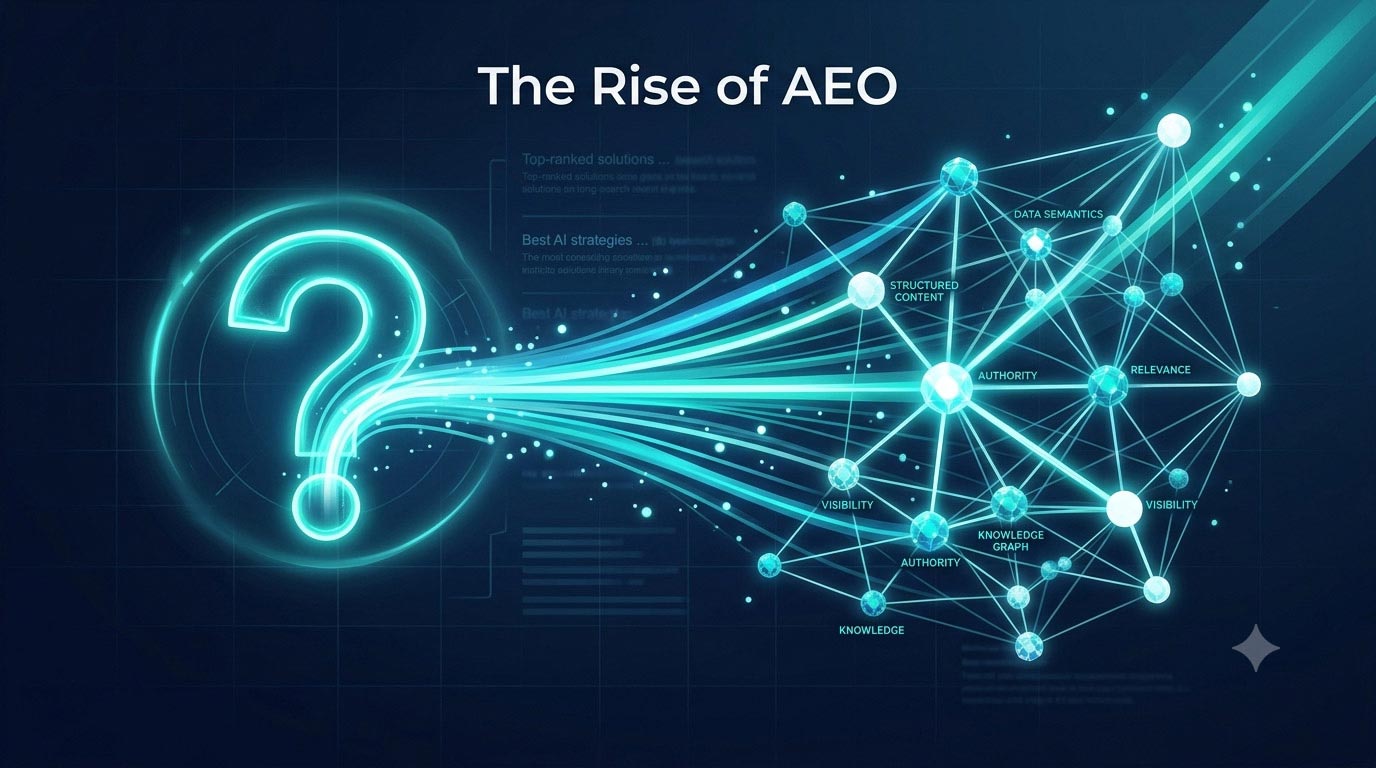
RELATED ARTICLE: The Rise of AEO: Why Your Website Must Answer First
Write for questions, not just keywords
Traditional keyword targeting often focuses on phrases people might type into a search engine.
AI-powered search is changing how people express those needs. Instead of searching for a few words, users can ask complete questions and expect a more detailed response.
A business website should therefore consider the questions surrounding its products or services.
Instead of simply writing:
“Professional website design services.”
A stronger page might explain:
“We design responsive websites for small businesses that need a professional online presence without the complexity of managing a traditional website.”
The second example provides more context. It explains what the business does, who it serves and what problem it solves.
That context is useful for visitors and makes the subject of the page clearer to search systems.

Editing Helps AI-Generated Content Add Real Value
There is another reason human editing matters as AI-generated content becomes more common, not every AI-generated sentence adds value.
Google’s current guidance warns against producing large amounts of AI-generated content without adding value for users. It recommends focusing on original, useful, people-first content instead.
This does not mean brands cannot use AI to help create website content.
It means the finished result should not simply be accepted because an AI tool produced it.
A business owner can add information that AI does not have access to: First-hand experience, specific examples, customer questions, case studies, industry knowledge, local context and details about how the business actually operates.
That is where editing becomes more than proofreading.
It becomes the process of adding the information that makes the website genuinely useful.

The Best AI Website Workflow: Generate → Review → Edit → Launch
The most effective approach to AI website creation does not have to be complicated.
A simple workflow can look like this:
1. Generate – Use AI to create the initial website structure, content and design direction.
2. Review – Look through every page and identify anything inaccurate, irrelevant, repetitive or generic.
3. Edit – Refine the wording, replace unsuitable images, adjust layouts, improve navigation and add information that is specific to the business.
4. Optimise – Check headings, page titles, descriptions, internal hyperlinks, images, mobile layouts and other SEO fundamentals.
5. Launch – Once everything has been reviewed and the website accurately represents the business, publish it.
This approach allows businesses to take advantage of AI’s biggest strength – speed – without sacrificing the human judgement that makes a website useful.
And that is ultimately what makes editing so important.
AI can help you get there faster.
Editing helps make sure you are actually going in the right direction.
RELATED ARTICLE: How to Build a Website Fast Using AI: A Step-by-Step KNOWN AI Guide

How KNOWN AI Makes Website Editing Easier
The point of using an AI website builder is not to remove people from the website creation process. It is to make that process faster and more accessible.
KNOWN AI is designed around that idea.
We believe that AI works best when partnered with Humans!
Instead of spending hours starting with a blank page, users can use AI to create a website foundation and then refine it to suit their business. The ability to edit and customise that foundation is just as important as the initial generation.
That means businesses can spend less time worrying about technical complexity and more time making decisions that actually matter: what their customers need to know, how the brand should sound and what visitors should do next.
The best AI website builder is therefore not necessarily the one that creates a website in the fewest seconds.
It is the one that helps you create, edit and launch a website that works for your business.
AI Does the Heavy Lifting. You Make the Final Decisions.
AI has made website creation considerably faster.
A business can start with an idea, generate a website and have a strong foundation to work from without needing to know how to code or design every element manually.
But speed should not be confused with completion.
Editing gives businesses control over the final result. It provides an opportunity to check the details, improve the customer experience, strengthen the brand and make sure the website answers the questions visitors actually have.
It also creates an important balance between automation and human judgement.
As AI-powered search continues to evolve, Google is still emphasising the same fundamental principle: create useful, reliable and people-first content. Its current guidance for AI Overviews and AI Mode says existing SEO best practices remain relevant, with no special optimisation or additional technical requirements needed simply to appear in those features.
That makes the role of editing even clearer.
The future of AI website creation is not necessarily about removing human involvement. It is about using automation to reduce the repetitive work while keeping people in control of the decisions that require context and judgement.

Final Thoughts: Don’t Stop at the First Draft
AI can get a website remarkably close to finished in a remarkably short amount of time.
But “close” is not the same as “ready”.
A website represents a real business. It communicates with real customers, answers real questions and influences real decisions. That means the final version deserves more than an automatic publish button.
Generate the structure.
Review the content.
Edit the details.
Check the experience.
Then launch.
That simple process can turn an AI-generated starting point into a website that feels purposeful, useful and genuinely connected to the business behind it.
AI can build the foundation. Editing is what makes it yours.
RELATED ARTICLE: How to Write the Perfect AI Prompt to Build Your Dream Brochure or E-commerce Website

Frequently Asked Questions
Can I edit an AI-generated website?
Yes. Modern AI website builders increasingly allow users to modify the websites created during the initial generation process. Depending on the platform, this can include changing text, layouts, images, colours, fonts, pages and other design elements. The ability to continue refining a website is an important part of the modern AI website-building experience.
Why should I edit an AI-generated website?
Editing allows you to make sure the website accurately represents your business. You can correct information, adjust the tone of the content, replace generic images, improve calls to action and make the overall experience more relevant to your customers.
Does AI-generated website content need to be edited for SEO?
It should be reviewed before publication. SEO is not simply about inserting keywords into AI-generated copy. Content should be accurate, useful, relevant and written for the people who will actually use the website. Google recommends creating helpful, reliable, people-first content and says its existing SEO fundamentals remain relevant to AI-powered Search experiences.
Do I need special GEO or AEO optimisation for AI search?
There is no special Google requirement or separate piece of markup that guarantees inclusion in AI Overviews or AI Mode. Google’s current guidance says the foundational SEO practices that help websites perform well in Search also remain relevant to generative AI features. Clear, useful and well-structured information is therefore still important.
Can AI replace a web designer?
AI can automate many parts of website creation, but that does not mean every website should be published without human input. Businesses still need to make decisions about branding, messaging, customer experience, content accuracy and business goals. AI can reduce the amount of manual work involved while giving people more time to focus on those decisions.
How long should I spend editing an AI-generated website?
There is no universal amount of time. A simple website may only require a few targeted changes, while a larger business website may need more extensive content, design and usability reviews. The important thing is to review the website before publishing rather than assuming the first generated version is automatically ready.

Build Faster. Edit Smarter. Launch With Confidence.
AI website creation has made getting started easier than ever. But the goal should never be to publish the first version as quickly as possible.
The goal is to create a website that works.
With KNOWN AI, anyone can use AI to accelerate the website-building process while retaining the ability to shape the final result around their brand, products, services, customers and long-term website goals.
Because the best website is not necessarily the one AI generated first.
It’s the one you took the time to make your own.